Fontana went from citrus groves and poultry farms to a steel town when Kaiser Steel opened its mill here in 1942. The mill closed in 1984, but the city kept growing: about 214,000 people live here now, and roughly a third of the homes went up after 2000. Kaiser-era blocks, new north-side tracts and a large warehouse district each draw different pests. PesPro serves Fontana from its only office, in El Monte, about 32 miles west, with technicians who speak English and Spanish.
QualityPro certified (National Pest Management Association)
Reputation
4.9 stars from 132 Google reviews · 15+ years in business
Hours
Mon–Fri 8AM–6PM, Sat 9AM–3PM · 24/7 emergency line
Fontana at a glance
About 214,000 residents and 59,500 homes; the median home was built in 1989, and about 19,000 homes date from 2000 or later (US Census ACS 2020–2024).
In ZIP code 92335, around central Fontana, the median home dates to 1977 and about half of households rent; in north Fontana's 92336, the median is 1999 and one in five rents.
Transportation and warehousing jobs are 3.3 times as concentrated in Fontana as in California overall, and warehouse and storage jobs grew about 165% in five years (Beacon Economics, 2025).
San Bernardino County's Mosquito and Vector Control Program serves Fontana; in 2018 it logged 211 Fontana service requests, second only to the city of San Bernardino.
The state lists Aedes aegypti, a day-biting invasive mosquito, as present in Fontana, and a dead bird from Fontana tested positive for West Nile virus in 2026.
On July 29, 2026, county inspectors stopped food sales at a Merrill Avenue market over a cockroach infestation; sales resumed two days later.
About 49% of residents age 5 and older speak Spanish at home, and every PesPro technician works in English and Spanish.
Neighborhoods and landmarks we cover: Hunter's Ridge and the north Fontana foothill tracts, Downtown Fontana and the Forge District, the Foothill Boulevard corridor, central blocks around Merrill, Mango and Miller avenues, Slover Avenue and the Southwest Industrial Park area, the Auto Club Speedway area on the former Kaiser Steel site, streets near Martin Tudor Jurupa Hills Regional Park, the Fontana Metrolink station area.
From citrus land to Kaiser Steel to a freeway crossroads
The city's own history traces Fontana to 1905, when A.B. Miller bought about 17,000 acres then called Rosena and turned them into citrus orchards, poultry farms and cattle land. Henry J. Kaiser opened his steel mill on the edge of town in 1942, and it rolled steel plate for Liberty and Victory ships during World War II. The mill stopped operating in 1984, and the Auto Club Speedway was built on its site in the mid-1990s.
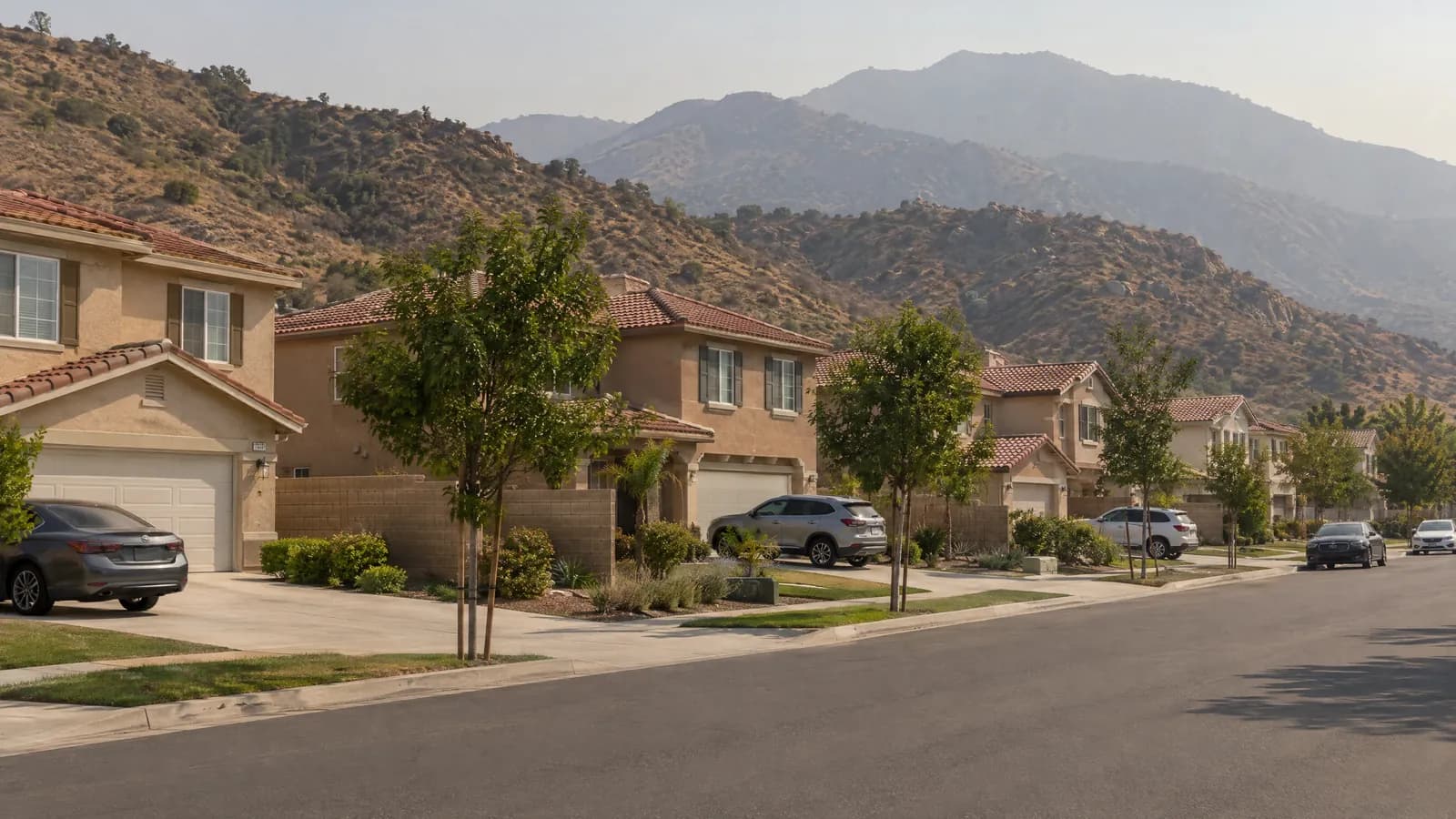
Growth has not stopped since. Census estimates put the median Fontana home at 1989: about 7,700 homes predate 1960, some 14,500 were built in the 1980s alone, and roughly 19,000 have gone up since 2000. Houses from the steel decades are the likeliest to have worn foundation vents, tired garage seals and patched plumbing. Newer homes are tighter, yet pests still find the gaps around pipes, vents and garage doors. [4][1]
Central Fontana and the north-side tracts are different jobs
ZIP code areas give a closer look, although they do not follow city limits exactly and take in some unincorporated county pockets. In 92335, around central Fontana, the median home was built in 1977, more than a quarter of homes predate 1960 and about 52% of households rent. Roughly 7,000 homes there sit in buildings of five or more units, and about 1,450 are mobile homes.
North Fontana's 92336 looks like another city. Its median build year is 1999, about half its homes date from 2000 or later, nearly nine in ten are detached houses and only about one household in five rents.
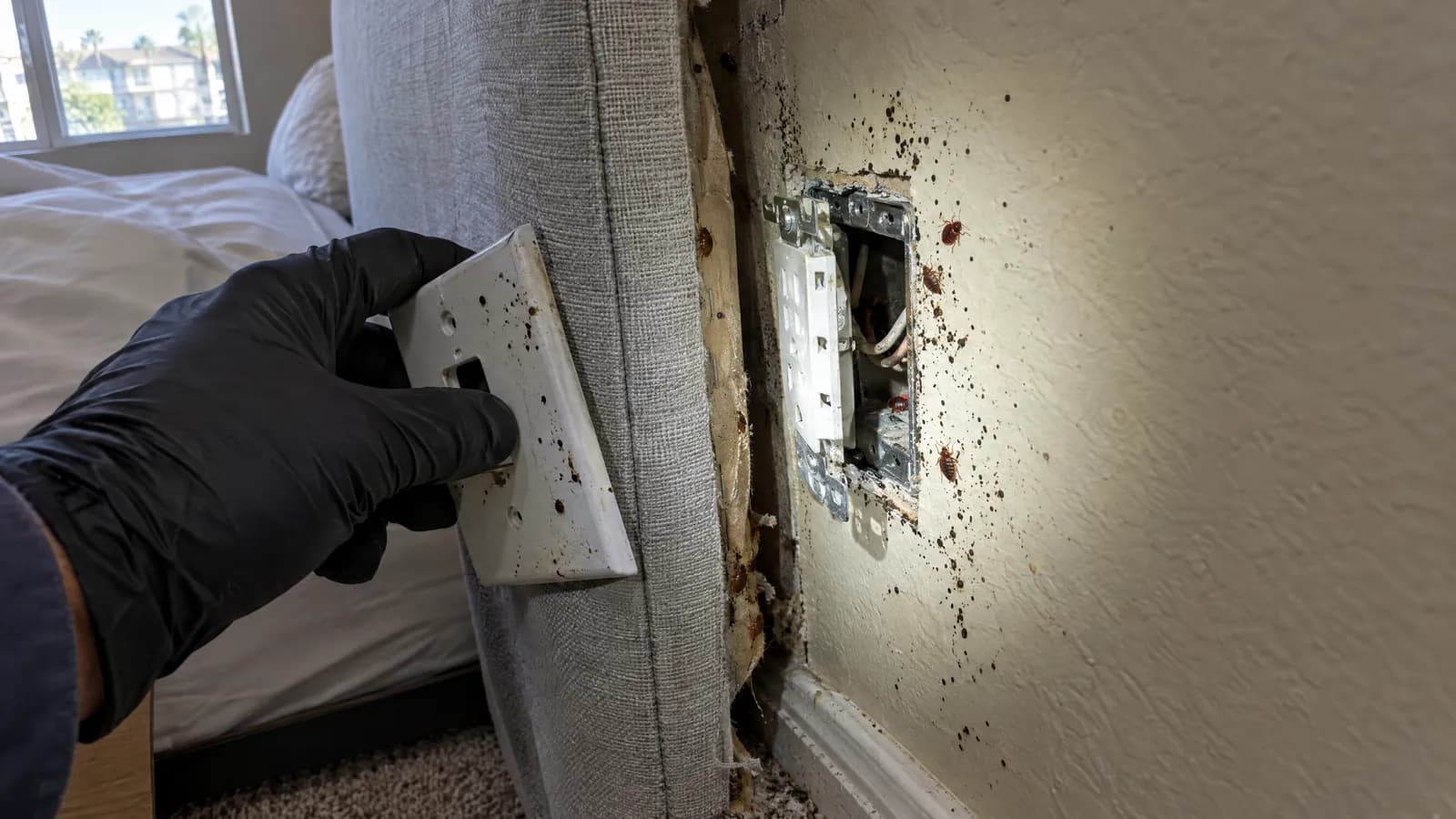
That split shapes what we expect to find. In central Fontana the likely calls are German cockroaches and bed bugs moving between apartments, plus rodents under older houses and mobile-home skirting. In the north, newer houses back onto slopes and open land, so mice, rats, spiders and wasps arriving from outside are more typical. [2][3]
Warehouses, loading docks and the logistics boom
A 2025 employment report prepared for the city by Beacon Economics calls logistics one of Fontana's most specialized industries. Transportation, warehousing and utilities accounted for about 9,500 jobs in mid-2024, a concentration 3.3 times the state's. Warehousing and storage employment was up roughly 165% over five years, despite a dip in the latest year.
Many of those buildings sit near homes and schools. In 2022 the state attorney general settled a lawsuit over a warehouse of about 200,000 square feet at Slover and Oleander, on the southern edge of Jurupa Hills High School. The city's sustainability ordinance now requires tall walls and landscape buffers beside sensitive uses. It also calls for plug-in power at loading docks for refrigerated trucks, a sign of how much food moves through.
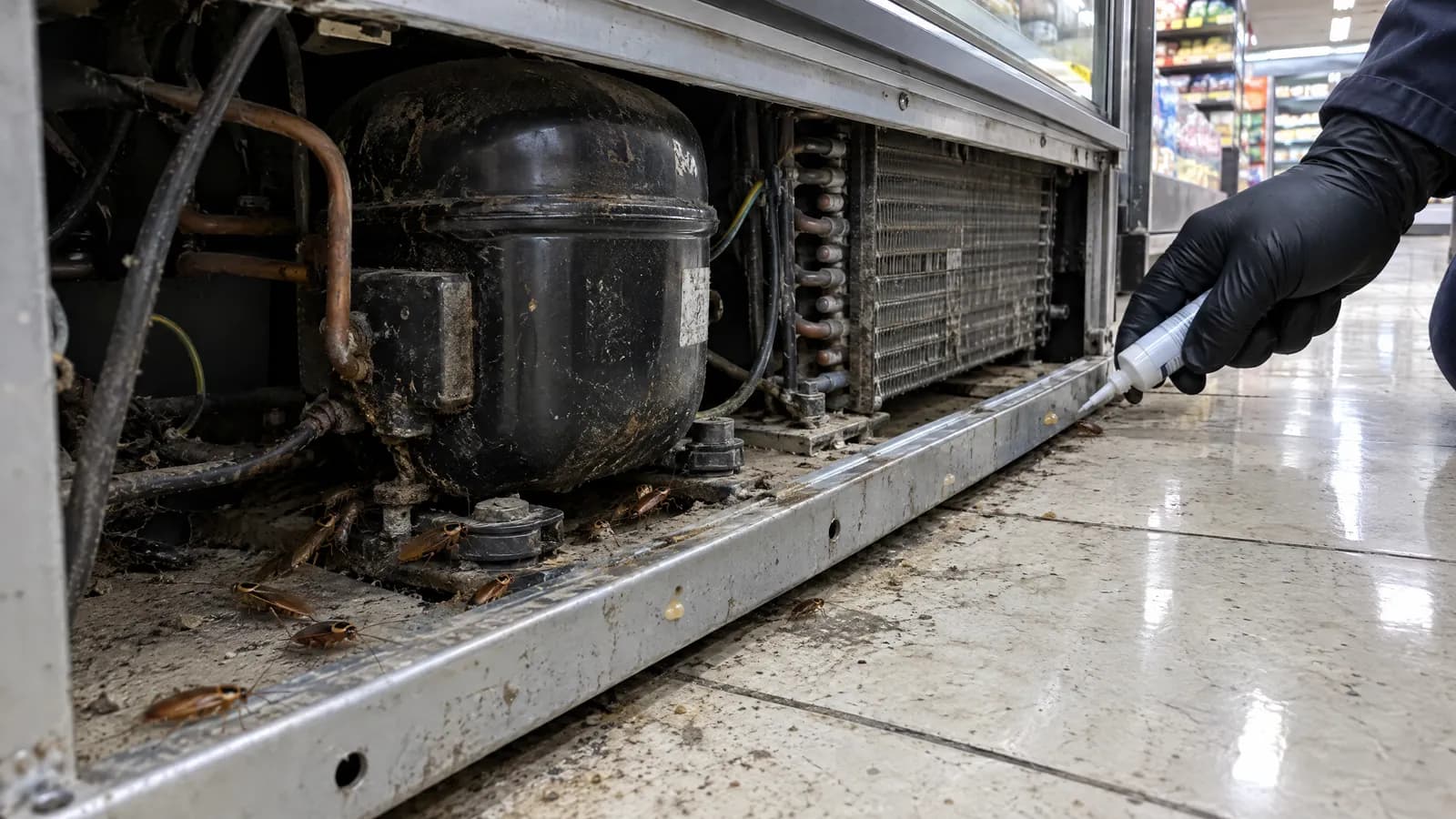
For pest control, that means pallets, dock doors and break rooms. UC IPM lists warehouses among the buildings German cockroaches infest, and dock doors left open between trucks are likely entry points for mice and rats. Our commercial programs combine exterior monitoring, door seals, interior traps and a dated log for audits. [5][7][6][30]
Canyons on the north edge, the Jurupa Hills to the south
Fontana's north side climbs toward the mountains. In August 2014, police tracked a mountain lion through the Hunter's Ridge community, on the 4200 block of Foxborough Drive, until it slipped into a canyon behind several homes. The Fontana Herald News reported that lions had been seen in the hilly northern neighborhoods of Fontana and Rancho Cucamonga several times over the previous year.
At the south end, Martin Tudor Jurupa Hills Regional Park on Sierra Avenue has trails into the hills. The county's vector program lists that park, Hunter's Ridge Park, Shadow Park and Veterans Park among the Fontana sites it monitors. Its 2018 rodent surveys for plague and hantavirus found no positive animals.
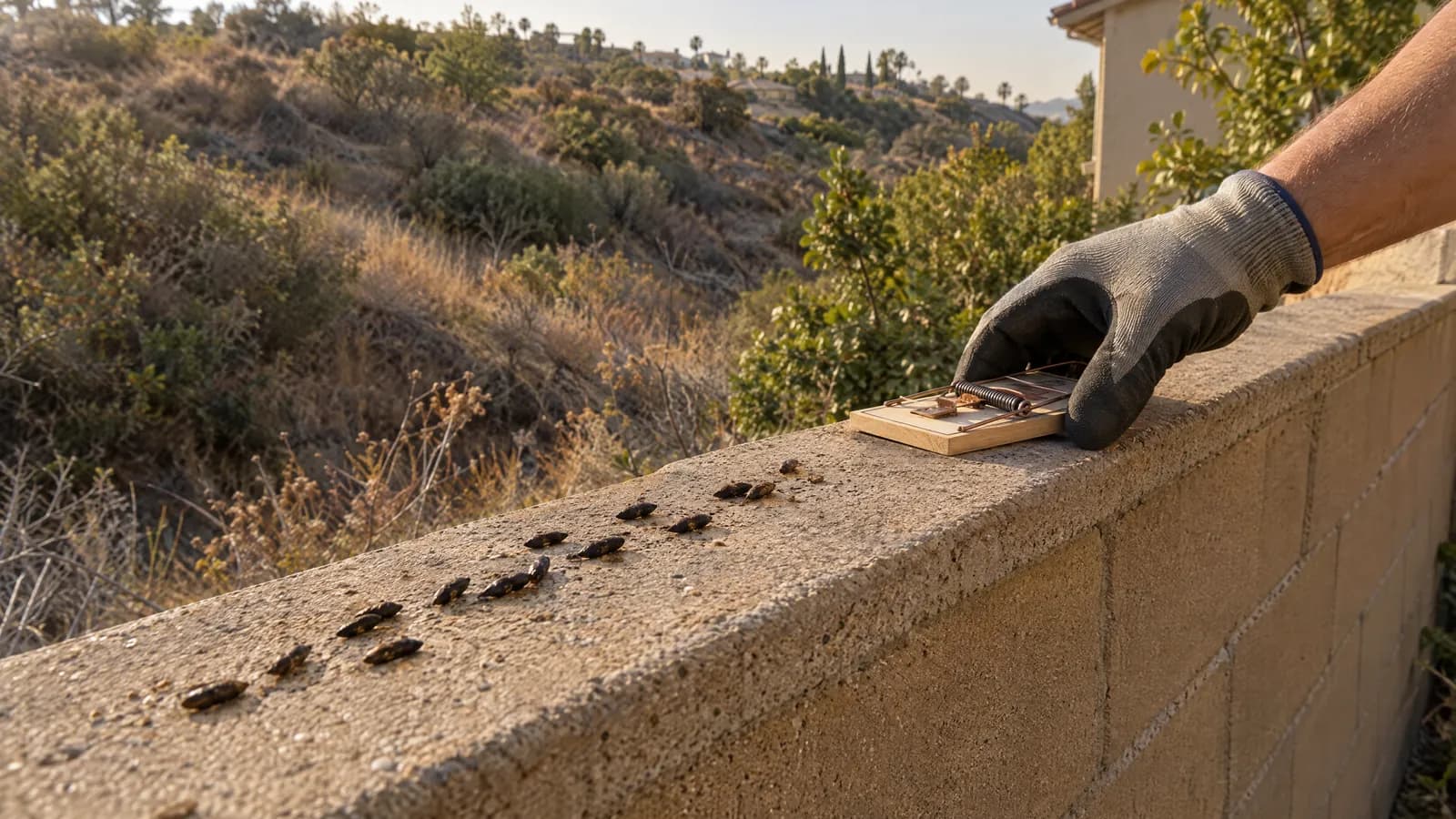
Homes that back onto canyon or hillside brush are likely to see more rodents, ground squirrels, spiders and wasps, so we lean on sealing and snap traps there. Large animals such as coyotes or mountain lions are a matter for Fontana Police Dispatch, which handles roaming and dangerous animal calls. [8][9][13][10]
Mosquitoes and West Nile: the county program covers Fontana
Fontana is one of the valley cities where San Bernardino County's Mosquito and Vector Control Program provides service, at (800) 442-2283. In 2018, 211 of its 1,299 service requests came from Fontana, and block surveys after mosquito complaints included 711 Fontana property inspections, more than in any other city.
West Nile has a local record. In July 2017 the county reported positive sentinel chickens in Fontana and San Bernardino and a positive mosquito sample drawn from Fontana, Rialto and Redlands. State tables list West Nile–positive dead birds from Fontana every year from 2013 through 2017. None appeared from 2018 through 2025, then one turned up in 2026, when the county logged 19 in all.
The state also lists Aedes aegypti as present in Fontana; it bites by day, and the county notes that water the size of a bottle cap can breed mosquitoes. PesPro does not offer mosquito control, so call the county about standing water or a neglected pool. Statewide, health officials called 2026 the most active West Nile season in five years. [11][13][14][15][16][17][18]
Bees, wasps and 100-degree days
On May 27, 2020, a stolen car fleeing Fontana police crashed into a tree on Mango Avenue near Miller Avenue and split open a large beehive. At least three officers were taken to a hospital as a precaution, and the street stayed closed until vector control staff removed the bees.
San Bernardino County advises treating every honey bee colony as if it were Africanized, since only lab tests tell them apart. Africanized bees defend a hive in greater numbers and deliver about ten times as many stings. Fontana opens cooling centers when the forecast reaches 100 degrees, and hot spells likely send bees and wasps hunting for water around homes. We remove wasp nests and relocate live honey bees when feasible. [19][20][21]
Year-round; more indoor activity in fall and winter
Canyon-edge homes in the north, older central houses, mobile homes and warehouse docks
German cockroaches
Year-round
Apartments in central Fontana, market and restaurant kitchens, warehouse break rooms
Turkestan & American cockroaches
May through October
Meter boxes, block-wall cracks and drains during hot spells
Honey bees & wasps
Spring swarms; summer nests
Trees, wall voids and eaves; the county advises treating every honey bee colony as Africanized
Mosquitoes (county program)
Summer into fall
West Nile birds found in Fontana in 2013–2017 and 2026; report breeding sites at (800) 442-2283
Bed bugs
Year-round
Large apartment complexes, move-ins and secondhand furniture
Ants & black widows
Spring through fall
Irrigated yards beside dry slopes, garages and block walls
Pest reports in and around Fontana
Public-health notices, vector-control alerts and local news we track for this area. Summaries are ours; follow each link for the original report.
· The Sun (Southern California News Group)
San Bernardino County restaurants shut down by health inspectors, July 23-30
Weekly list based on county public health data: food sales at a market on Merrill Avenue in Fontana were stopped on July 29, 2026 for a cockroach infestation.
Fontana officers catch suspected car thief, but then get swarmed by bees after car hits tree
A pursuit ended in a crash into a tree on Mango Avenue that broke open a large hive; at least three officers went to a hospital as a precaution and vector control staff removed the bees.
· San Bernardino County Department of Public Health
Positive indicators for West Nile Virus found across the county
Seven sentinel chickens in Fontana and San Bernardino and a 14-mosquito sample collected in Fontana, Rialto and Redlands tested positive, the first West Nile indicators of 2017 in the county program's area.
How far is PesPro from Fontana, and which parts of the city do you serve?
Our only office is at 12207 Chosen St in El Monte, about 32 miles west of Fontana in a straight line. We serve homes, rentals and businesses from the north Fontana tracts down to the streets near the Jurupa Hills. If you are not sure your street is inside city limits, call and we will confirm your address is on our route.
Who should I call about mosquitoes or a green pool in Fontana?
San Bernardino County's Mosquito and Vector Control Program, at (800) 442-2283; it also takes service requests online. PesPro does not provide mosquito control. If a technician notices buckets, plant saucers or a dripping hose bib during a visit, we will mention it, since those wet spots also feed ants and roaches.
Can PesPro set up a program for a Fontana warehouse or distribution center?
Yes. A typical plan pairs exterior monitoring stations with interior traps along walls and racking. We also check dock door seals and sweeps and record every visit in a written or digital log you can show auditors. Visits can be scheduled around shifts, and food-handling areas get only products labeled for those spaces.
My house backs onto a canyon in north Fontana. What pests should I expect?
Mostly rodents, spiders, wasps and ants coming in from the brush, plus ground squirrels along slopes and walls. We seal openings at the roofline, vents and garage, and we rely on snap traps rather than poison near open land where hawks, owls and coyotes hunt. Report a mountain lion or coyote to Fontana Police Dispatch.
What should I do if I find a beehive in a wall or tree?
Keep people and pets away and avoid noise or vibration near it; the county notes that Africanized bees react to both. Do not spray it or plug the entrance. Call us: we remove wasp and yellow jacket nests, and when it is feasible we relocate a live honey bee colony instead of destroying it.
Can the technician explain everything in Spanish, or in another language?
Every PesPro technician speaks English and Spanish, so inspections, quotes and prep steps can be handled in either. Census figures show about 5,000 Fontana residents speak Tagalog at home and about 1,600 speak Vietnamese. Our website is available in those languages and in Chinese and Korean, although service in person and by phone is in English or Spanish.