West Nile Virus Activity 2026
As of October 21, 2026, one positive dead bird from Valencia (September 23) and one positive mosquito sample from Castaic, outside the city (September 18).
Read the original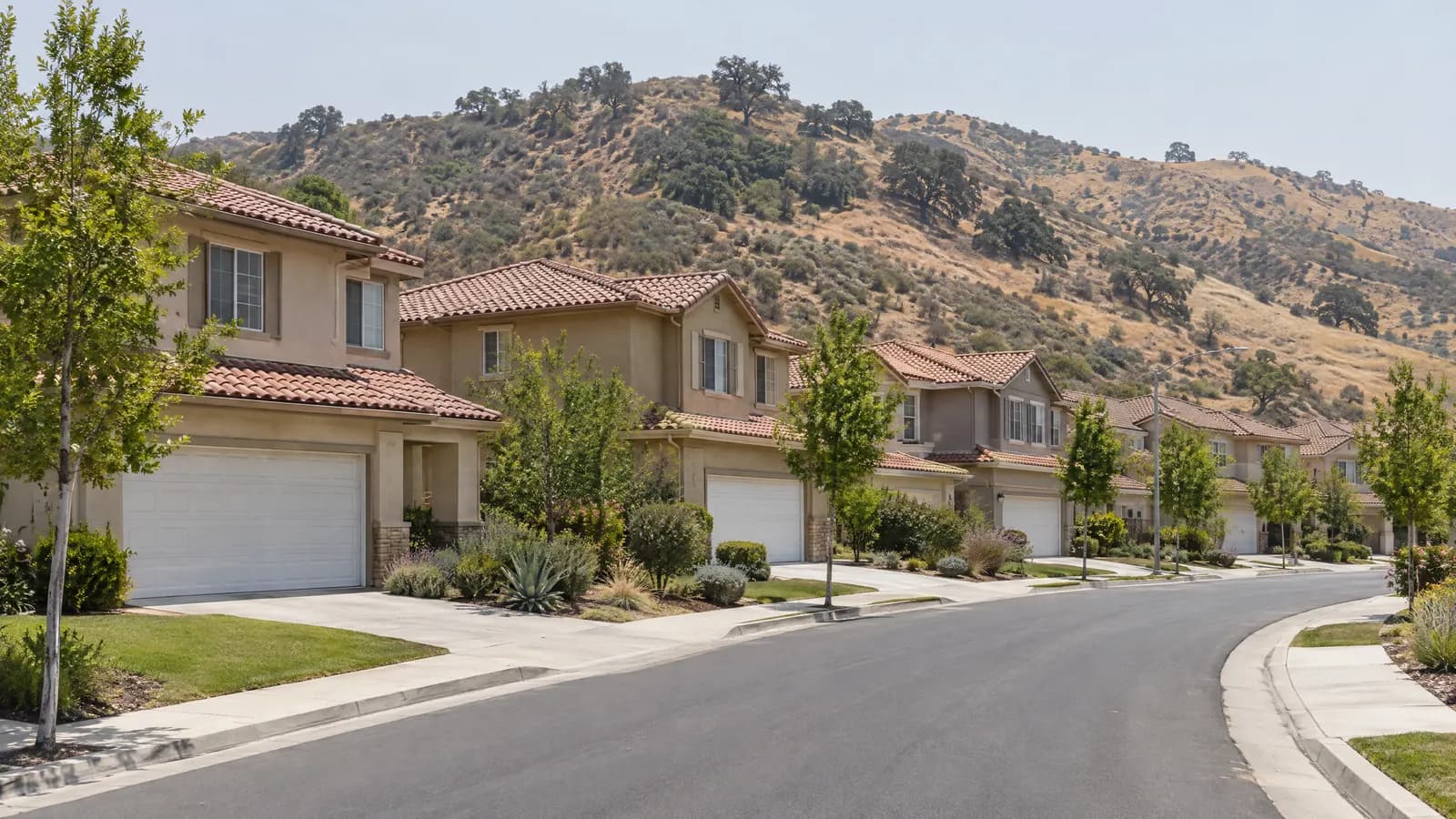
Santa Clarita is young by Los Angeles County standards. Canyon Country, Saugus, Newhall and Valencia voted to become one city in 1987, and 1987 is also the median construction year of its homes. A greenbelt of more than 12,000 acres of publicly owned open space wraps around the city, the Santa Clara River runs through it, and summers get very hot. Those facts shape where rodents and cockroaches come from here. PesPro serves Santa Clarita from its single office in El Monte, about 36 miles away.
Free quote and a written plan before any treatment
Neighborhoods and landmarks we cover: Old Town Newhall and Placerita Canyon, Valencia and the Town Center area, Saugus and Bouquet Canyon, Canyon Country and Sand Canyon, Fair Oaks Ranch, streets along the Santa Clara River Trail, Copper Hill and the North Valencia hills.
Santa Clarita became a city on December 15, 1987, after voters in Canyon Country, Saugus, Newhall and Valencia approved Measure U by 14,723 to 6,597. It began at 39 square miles. More than 30 annexations later it covers over 60, and in 2017 the city called itself the third-largest city in Los Angeles County.
Census estimates count about 78,100 homes. The median was built in 1987, the 1980s added the most, about 20,200, and some 22,600 went up in 2000 or later. Fewer than 3,400 predate 1960. About 61% are detached houses, 11% are townhomes or other attached homes, and 72% of households own their home.
Age still varies by ZIP code area, and those areas include some unincorporated land. In 91321, which covers most of Newhall, the median home dates to 1978 and 39% of households rent. In Valencia's 91354 the median is 2000, and in Saugus's 91350 it is 1989, with 79% of homes detached.
Newer does not mean sealed. Tile roofs can leave openings at the eaves, garage door seals wear out, and utility and irrigation lines pass through walls. Older Newhall and Canyon Country buildings add tired vents and plumbing holes, so every inspection covers the roofline, garage and foundation. [3] [1] [2]
The city's Open Space Preservation District, formed after a 2007 vote of property owners, points residents to more than 12,000 acres of publicly owned greenbelt around Santa Clarita. How close that land sits to houses became clear in October 2019. The Tick Fire burned 4,615 acres around Canyon Country, destroyed 29 structures and threatened about 10,000 homes.
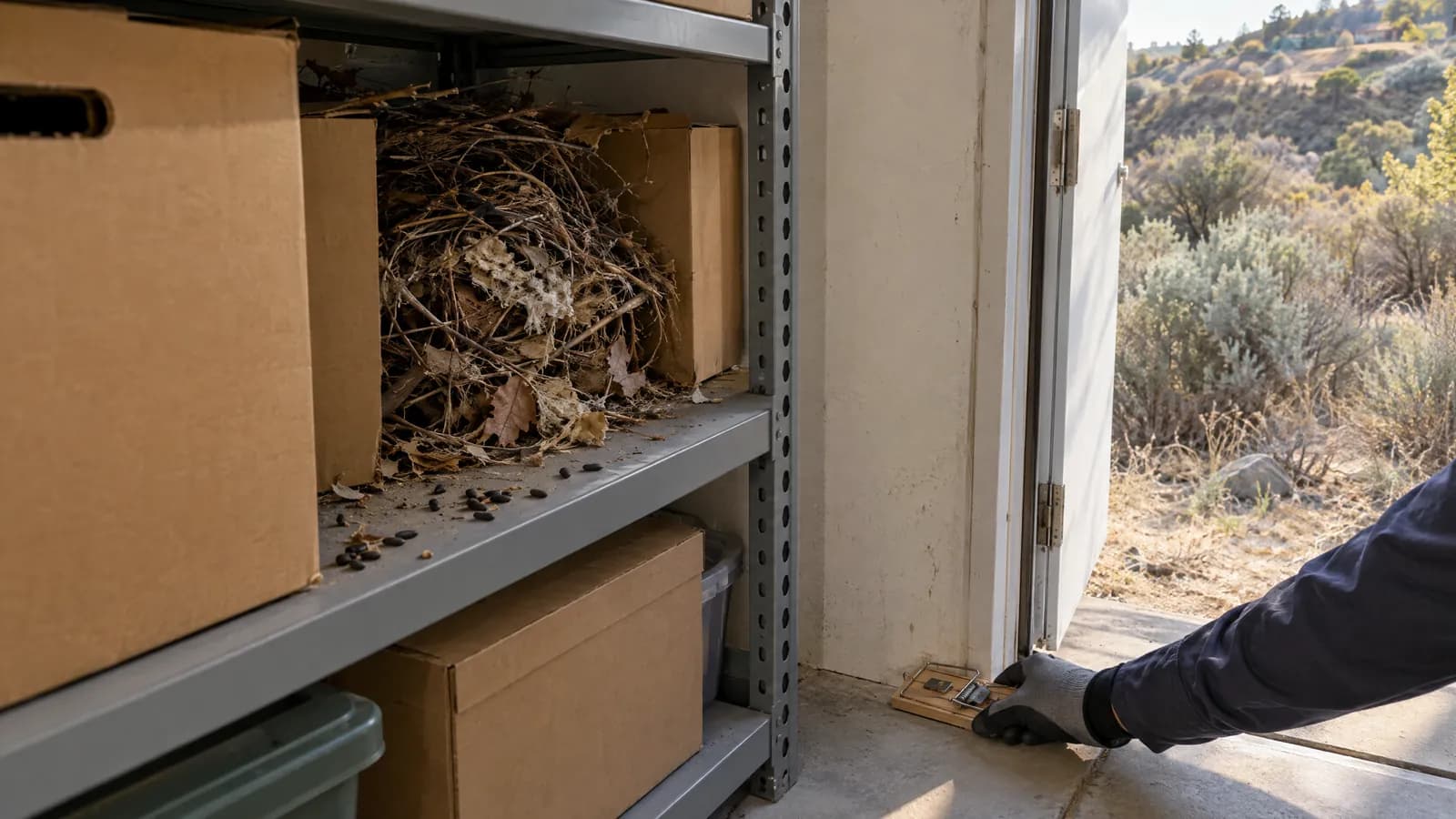
Wild land brings native rodents. UC IPM explains that deer mice usually stay out of towns unless fields, brush or other natural habitat surround them, and streets backing onto the greenbelt fit that description. Native woodrats, also called pack rats, can turn up around homes too; their furry tails set them apart from roof rats.
Deer mice are the main carrier of Sin Nombre hantavirus, so cleanup needs care. UC IPM advises soaking droppings and nests with a disinfectant before removing them, never sweeping or vacuuming them dry, and sealing openings larger than 1/4 inch. Near open space we rely on snap traps and sealing rather than poison bait. [4] [7] [18] [19]
Summers here are hot and dry. On July 7, 2018, the National Weather Service measured 111°F in the Santa Clarita Valley, according to SCVNews.com, which listed 93°F as the typical high for that date.
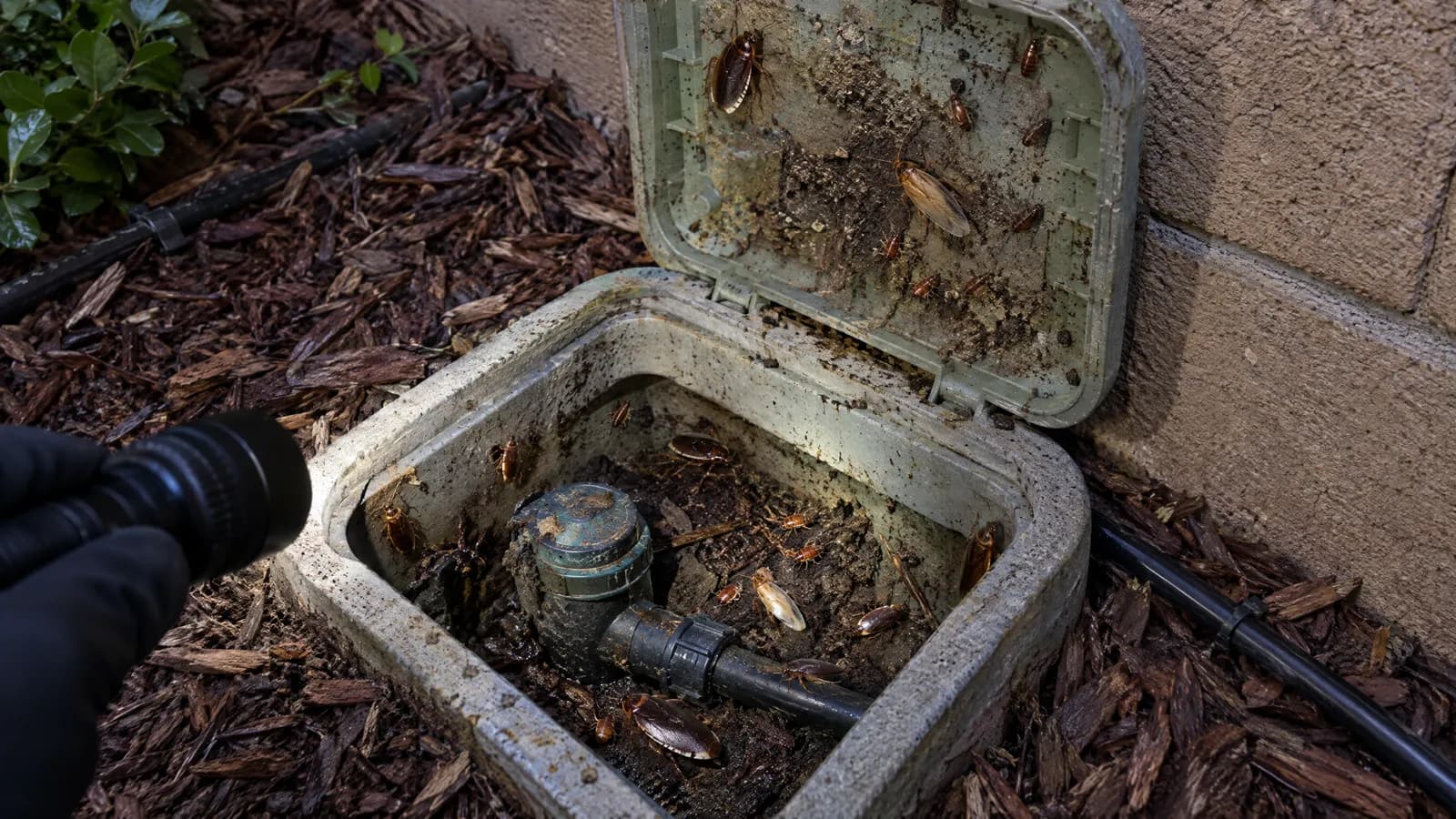
That climate suits a cockroach many residents have never heard of. UC IPM reports that the invasive Turkestan cockroach is displacing the oriental cockroach in southern California and other warm, dry parts of the state. It lives outdoors in water meter boxes, cracks between concrete blocks, leaf litter and potted plants, and moves indoors when numbers build.
When a yard has block walls, valve boxes and planters, our cockroach inspection starts outside. Treating those outdoor hiding places, and closing gaps under doors and around pipes, keeps the problem from moving into the kitchen. [8] [20]
The Santa Clara River and its tributary washes cross the city. The city calls its regional river trail the backbone of about 80 miles of trails and 20 miles of paseos. It also warns that under-crossings along the river and its tributaries can flood and close without notice.
Streamside brush is rodent country. UC IPM lists vegetation on riverbanks and streams, along with mature landscaping, among the places roof rats nest, and notes that they travel 300 feet or more for food. Homes near the river, its washes or landscaped slopes are likely to see rats moving along fences and utility lines at night. [5] [19]
Mosquito surveillance and control belong to the Greater Los Angeles County Vector Control District, which lists Santa Clarita among its member cities. In September 2011 the district reported the year's first positive mosquitoes in Newhall and Canyon Country.
Its recent tables show small numbers here, mostly late in summer. Santa Clarita had one positive sample and one dead bird in 2021, five samples in 2023 starting September 15, and four in 2024 starting July 9. The city did not appear in the 2022 or 2025 tables.
Through October 21, 2026, the district had logged one positive dead bird in Valencia, found September 23, and one positive mosquito sample in nearby Castaic, which is outside the city. The state also lists Aedes aegypti, a daytime biter that breeds in small containers, as present in Santa Clarita. PesPro does not treat mosquitoes. [9] [11] [12] [13] [15] [14] [16] [10]
About 15,500 homes sit in buildings of five or more units, 8,300 are townhomes or other attached homes and roughly 2,700 are mobile homes. The ZIP code area 91351 in Canyon Country alone has about 1,850 mobile homes. The city oversees space rents in its manufactured home parks under Municipal Code chapter 6.02.
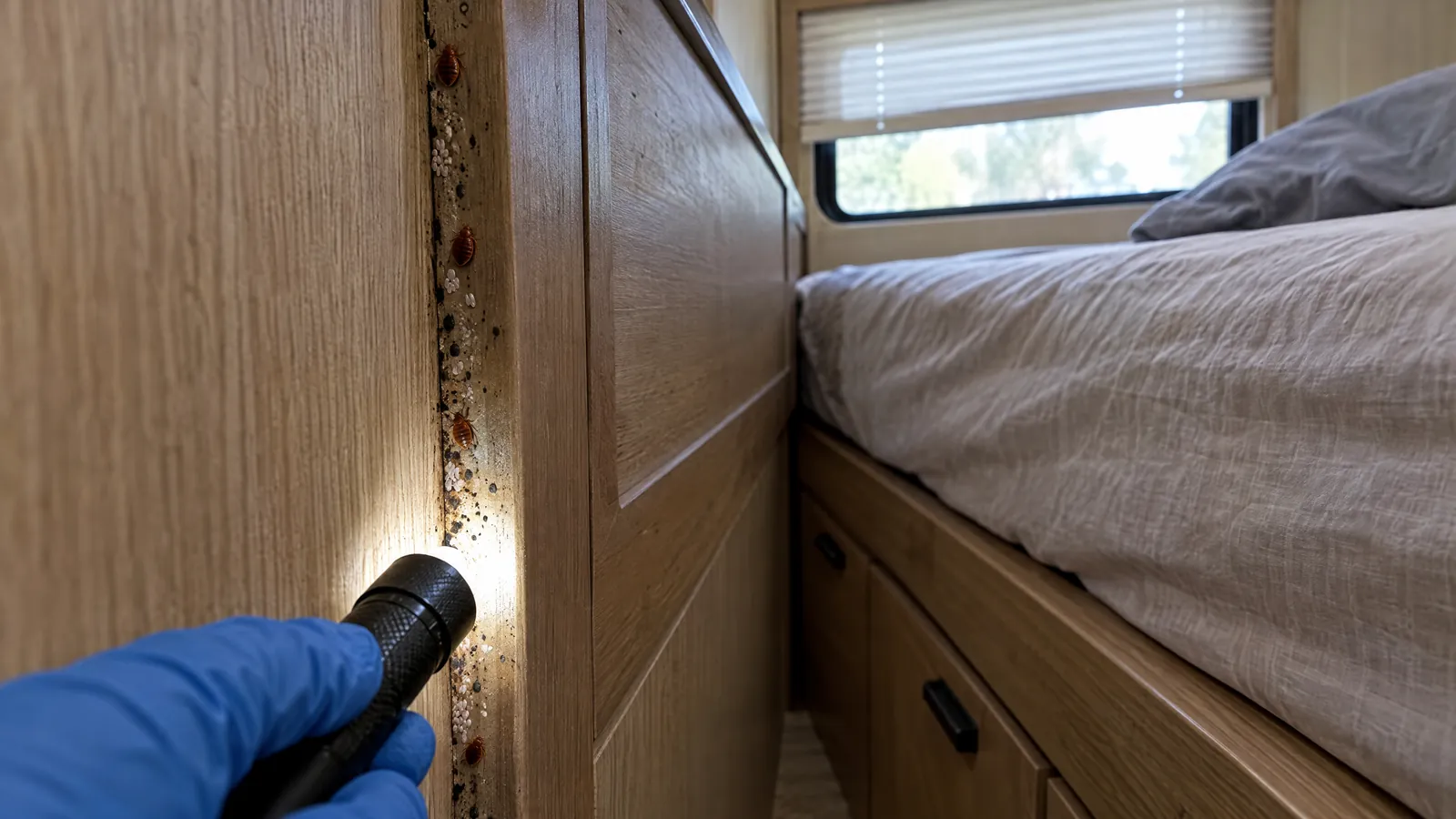
Each type has its own weak points. Shared walls in condos and apartments let German cockroaches and bed bugs move between units. Under manufactured homes, gaps in skirting and utility openings tend to let rodents and outdoor cockroaches in. We work with owners, tenants, HOAs and park managers on plans that cover every affected home. [1] [2] [6]
| Pest | Peak season | What to watch for locally |
|---|---|---|
| Deer mice & woodrats | Year-round; more nesting indoors in cooler months | Garages, sheds and storage near the open-space greenbelt |
| Roof rats | Year-round | River and wash vegetation, mature landscaping and fruit trees |
| Turkestan & oriental cockroaches | Late spring through fall | Valve boxes, meter boxes, block walls and planters |
| American cockroaches | Summer heat | Floor drains, cleanouts and garages in older buildings |
| German cockroaches | Year-round indoors | Condo, apartment and restaurant kitchens |
| Mosquitoes (vector control district) | July through October | Local positives began July 9 in 2024 and September 15 in 2023 |
| Bed bugs | Year-round | Shared walls, travel and secondhand furniture |
Public-health notices, vector-control alerts and local news we track for this area. Summaries are ours; follow each link for the original report.
As of October 21, 2026, one positive dead bird from Valencia (September 23) and one positive mosquito sample from Castaic, outside the city (September 18).
Read the originalThe Greater Los Angeles County Vector Control District reported two West Nile–positive mosquito samples in Newhall and one in Canyon Country, the first that year in either area.
Read the originalThe Tick Fire burned 4,615 acres around Canyon Country, destroyed 29 structures, damaged 44 and threatened about 10,000 residences before evacuation orders were lifted.
Read the originalState table listing Aedes aegypti as present in Santa Clarita (and in neighboring Castaic) and Aedes albopictus as not found.
Read the originalA record 220 county-wide cases in 2025, up from 187 in 2024, with nearly nine in ten patients hospitalized; fleas on rats, stray cats and opossums spread the disease.
Read the originalYes. We serve homes, condos and businesses in Valencia, Saugus, Newhall and Canyon Country from our office in El Monte, about 36 miles away, and plan Santa Clarita visits by route. Castaic and other unincorporated areas next to the city are a call away too: give us your address and we will confirm it is on our route.
The Greater Los Angeles County Vector Control District, at 562-944-9656 or GLAmosquito.org. It covers Santa Clarita as a member city and takes reports of standing water, green pools and heavy biting. PesPro does not treat mosquitoes, though we point out standing water we notice during a visit.
Yes. Newer homes have their own gaps: openings at the ends of roof tiles, worn garage door seals, vents with damaged screens and holes where utility lines enter. UC IPM notes that young rats can squeeze under a door with a 1/2-inch gap, so a garage door that no longer meets the slab is a common way in.
No. We do not handle snakes, coyotes, bobcats, raccoons, skunks or opossums; for those, contact county animal services or a licensed wildlife trapper. Our work is rodents and insects, and we can point out the food, water and shelter around a property that keeps drawing animals in.
About 23% of Santa Clarita residents age five and older speak Spanish at home, and our technicians explain findings and prep steps in English or Spanish. Tagalog is the next most common language the Census lists, at about 3%. Our website also has pages in Tagalog, Korean, Chinese, Armenian and Persian, but visits and calls are in English or Spanish.
It depends on the pest, the size of the property, how far the problem has spread and how much sealing is needed. A technician looks the property over first, and you get a written quote that lists what is included before any treatment starts.
24/7 Emergency response available throughout Los Angeles County and San Bernardino County
Same-day service available for an extra fee • Licensed & Insured • QualityPro Certified