West Nile Virus Activity 2026
As of October 21, 2026, one positive dead bird from Valencia (September 23) and one positive mosquito sample from Castaic, outside the city (September 18).
Read the original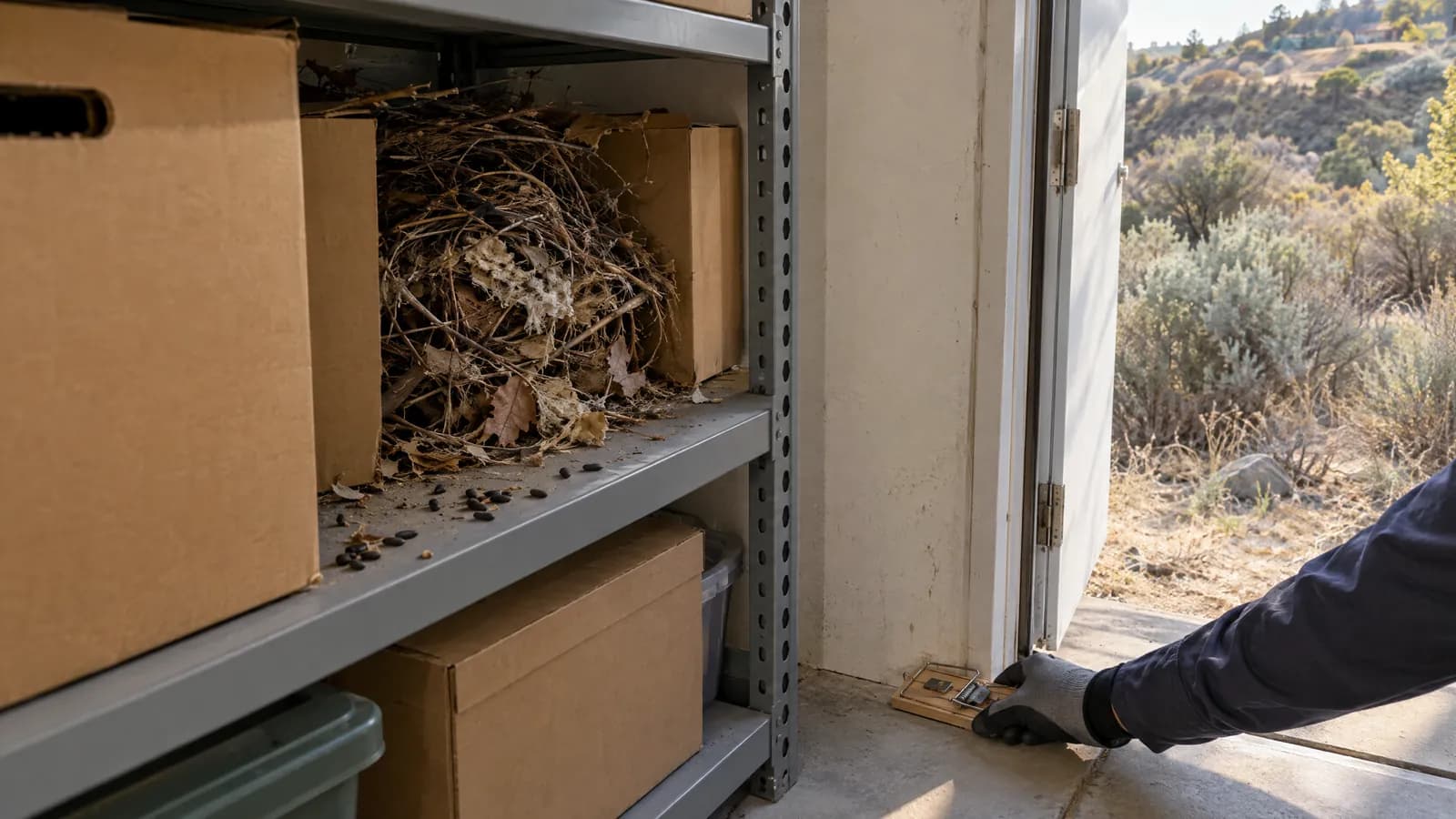
The rodent in a Santa Clarita garage may be a roof rat from the landscaping, a house mouse, or a native deer mouse or woodrat from the hills next door. We find out which one, trap it, close the way in with metal and clean up the droppings with care.
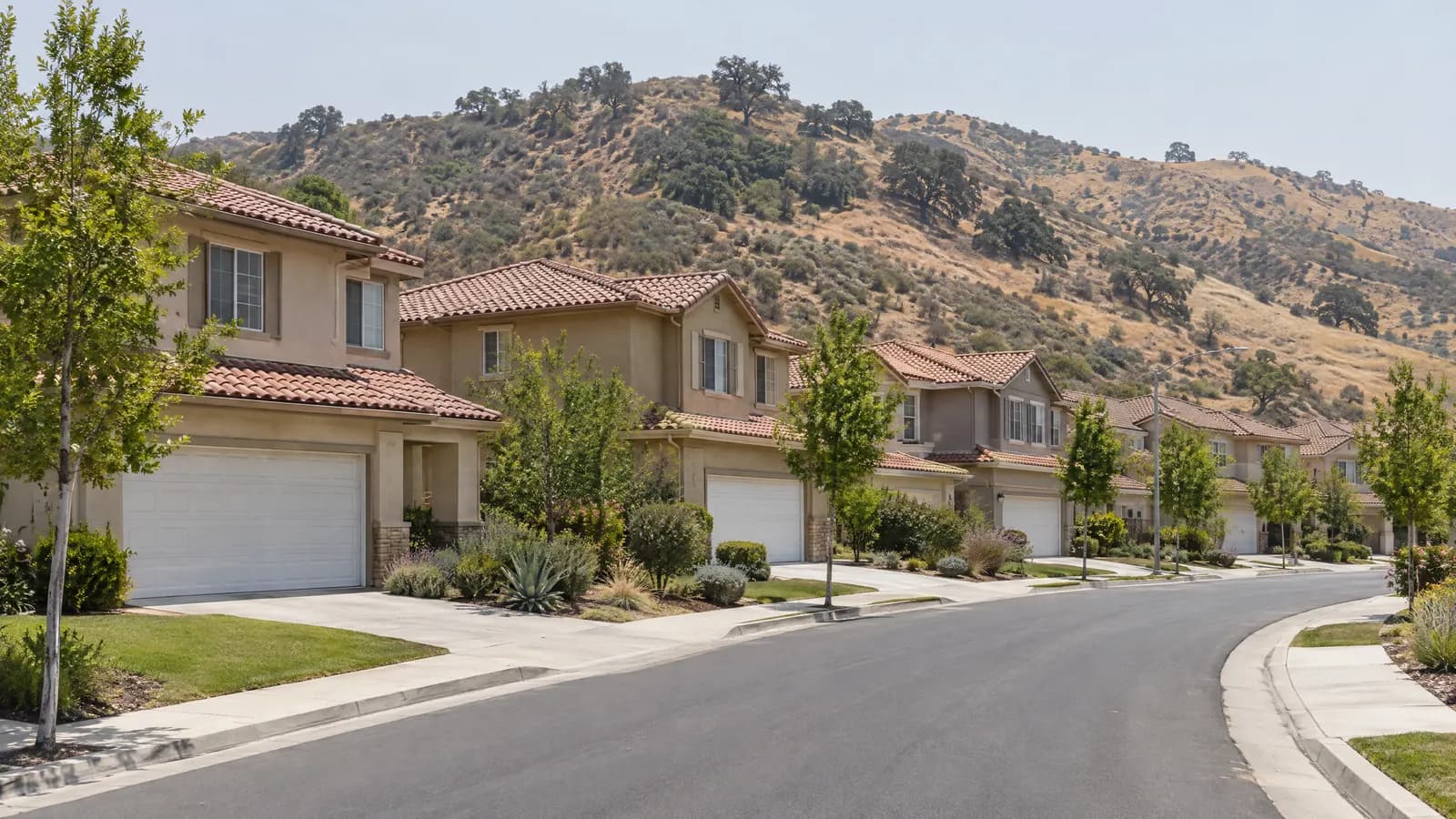
More than 12,000 acres of publicly owned open space surround Santa Clarita. Homes on the edge of town border land where native deer mice and woodrats are likely to live.
Free quote and a written plan before any treatment
The city's Open Space Preservation District points to more than 12,000 acres of publicly owned greenbelt around Santa Clarita. The 2019 Tick Fire showed how close that land comes to houses: it burned 4,615 acres around Canyon Country, destroyed 29 structures and threatened about 10,000 homes.
According to UC IPM, deer mice seldom live inside towns unless natural habitat such as fields or brush surrounds them. Streets that back onto the greenbelt meet that condition. Native woodrats, or pack rats, can also turn up around homes, and their furry tails set them apart from the scaly-tailed roof rat.
Near open space we rely on snap traps and exclusion, because a rodent that eats poison bait can in turn poison the hawk, owl or bobcat that catches it. UC IPM also advises keeping firewood and brush piles away from the house. [4] [7] [18] [19]
The Santa Clara River and its tributary washes run through the middle of the city. A riverside trail ties together the city's trail system, and its under-crossings can flood during severe rain.
UC IPM lists vegetation on riverbanks and streams, along with mature landscaping, among the places roof rats nest. They routinely travel 300 feet or more for food, run fence tops and utility lines at night and eat fruit on the tree. Homes near the river, its washes or landscaped slopes are likely to see that traffic.
On those lots we trim the routes as well as trapping: branches within 6 feet of the roof, ivy on fences and vines on walls. Roof and attic vents then get 1/2-inch galvanized mesh, the size UC IPM gives for vent covers. [5] [19]
Census estimates put the median Santa Clarita home at 1987, and about 61% of homes are detached houses. In newer tracts, rodents tend to get in at the ends of tile roofs, under worn garage door seals and where utility lines enter. UC IPM notes that young rats can squeeze under a door with a 1/2-inch gap.
Older stock adds its own openings. In ZIP 91321, which covers most of Newhall, the median home dates to 1978. Canyon Country's 91351 has about 1,850 mobile homes, where skirting gaps and utility openings tend to let rodents underneath.
Rats also cause trouble under the hood, since UC IPM warns that they gnaw the insulation on car engine wires. Their fleas matter too: LA County logged a record 220 flea-borne typhus cases county-wide in 2025, carried by fleas on rats, stray cats and opossums. [1] [2] [19] [17]
Roof rat, house mouse, deer mouse or woodrat: droppings, tails and nest material tell us which one, and where it gets in.
Snap traps for rodents already inside while openings are closed with metal rather than foam.
Droppings and nests are wetted with disinfectant before removal, and exterior monitoring catches new activity.
Public-health notices, vector-control alerts and local news we track for this area. Summaries are ours; follow each link for the original report.
As of October 21, 2026, one positive dead bird from Valencia (September 23) and one positive mosquito sample from Castaic, outside the city (September 18).
Read the originalThe Greater Los Angeles County Vector Control District reported two West Nile–positive mosquito samples in Newhall and one in Canyon Country, the first that year in either area.
Read the originalThe Tick Fire burned 4,615 acres around Canyon Country, destroyed 29 structures, damaged 44 and threatened about 10,000 residences before evacuation orders were lifted.
Read the originalState table listing Aedes aegypti as present in Santa Clarita (and in neighboring Castaic) and Aedes albopictus as not found.
Read the originalA record 220 county-wide cases in 2025, up from 187 in 2024, with nearly nine in ten patients hospitalized; fleas on rats, stray cats and opossums spread the disease.
Read the originalLook at the tail. UC IPM notes that woodrats, also called pack rats, have furry tails, while roof rats and Norway rats have scaly, mostly hairless ones. Woodrats are native and usually come from brush and open land nearby. Either way, sealing the garage and attic is what keeps them out.
Sweeping or vacuuming can raise dust, and deer mice carry Sin Nombre hantavirus. Wear gloves. UC IPM advises soaking droppings and nests with a disinfectant, such as one part bleach to nine parts water, for about 10 minutes before removing them. We can handle the cleanup where the area is accessible.
Our plan there starts with snap traps and sealing. UC IPM points out that a pet or wild animal can be poisoned by eating a rodent that took bait. Hawks, owls and bobcats prey on rodents, so we keep bait out of yards next to open space.
We cannot repair the car, but we can find where the rats live and how they reach it. The fix usually combines trapping, trimming the plants they travel through, sealing the garage and removing nest material.
Yes. Under a manufactured home we check skirting, utility openings and the underside; in condos and apartments we work with the HOA or manager on common areas and shared walls. Rodent Exclusion can be added to the rodent control program or booked on its own.
The rodent control program covers trapping, monitoring and prevention advice. Rodent Exclusion, the sealing of vents, eaves, utility penetrations and foundation gaps with durable materials, is quoted as an add-on or as a standalone job after the inspection.
Three rodents account for nearly every call in Santa Clarita, and they live differently. Roof rats climb into attics, trees, ivy and fence tops and eat backyard citrus and avocados on the tree. Norway rats burrow along foundations and under sheds. House mice live indoors, rarely more than about 30 feet from the nest.
Mild winters mean none of them hibernate, and the first cool nights and autumn rains push rats indoors. Older housing supplies the openings: any gap wider than a quarter inch at a vent screen, eave board, utility line or door threshold is enough.
The inspection covers attic, crawl space, garage, kitchen and yard, reading droppings, rub marks, gnawing and burrows to confirm which species is active and where it travels. Traps go on those routes: fastened to beams for roof rats, tight against walls for Norway rats, closely spaced for mice.
Indoors the program leans on snap traps rather than poison, following LA County guidance, because a poisoned rodent that dies inside a wall leaves odor and flies. Monitoring visits reset traps, remove what was caught and compare activity with the last visit so placements move as the rodents do. Sealing openings is Rodent Exclusion, a separate add-on.
Before the technician arrives at your Santa Clarita address, clear access to the attic hatch, under-sink cabinets and garage walls, and raise stored boxes so runways show. Pick up fallen fruit and bring pet food in at night. Do not set out poison first: it hides evidence and risks a dead rat in the wall.
Rats are wary of new objects and may ignore traps for days or weeks, so early visits leave traps baited but unset until the bait disappears. Catches and quieter nights follow; monitoring continues because new rats replace caught ones while fruit, ivy and open gaps remain. Never sweep droppings dry: glove up, soak with disinfectant, wipe, double-bag.
Every PesPro service carries a 30-day guarantee, and rodents sit in the strongest tier with bed bugs and cockroaches: if rats or mice reappear within 30 days of a service, PesPro returns for a third visit at no extra cost, where other pests would pay 30% of the original price for a return visit.
The quote is free and written after the inspection. Rodent control is priced by property size, activity found and how often visits are needed; exclusion is priced separately by the number and type of openings to seal. Trapping alone or sealing: the inspection says which.
Same-day service is available for an extra fee. It makes sense when rats are inside the living space, when wiring has been gnawed, when a Santa Clarita food business has an inspection pending, or when a tenant complaint has started a habitability clock. Call (323) 472-5329 any hour, or the office and WhatsApp line, (323) 303-3522, in business hours.
The LA County Department of Public Health reported record flea-borne typhus cases in 2025, ties the fleas to rats, free-roaming cats and opossums, and recommends controlling fleas before or alongside trapping where typhus is a concern. For landlords, California Civil Code 1941.1 lists vermin-free premises among habitability duties, so dated service records matter.
PesPro's program keeps digital service logs that Santa Clarita owners, HOA boards and inspectors can open any time, same-day compliance documentation when a citation is at stake, tenant-notification templates and consolidated invoicing for multi-site portfolios. Over 15 years the company has protected more than 10,000 properties, more than 500 of them multi-unit.
A house mouse weighs about half an ounce and stays within 30 feet of its nest. Rats weigh 5 to 18 ounces: a roof rat's tail is longer than its body and it favors attics; a Norway rat is stockier and burrows.
Rats avoid new objects and can ignore a trap for days or weeks; floor traps also miss roof rats traveling beams and pipes. If a trap line stays untouched past the second visit, placements move.
Sealing is Rodent Exclusion, a separate add-on and structural work: vents, utility penetrations, foundation cracks and roofline gaps closed with metal mesh, sheet metal or concrete. The inspection lists the openings found and quotes exclusion on its own line.
If rodent activity reappears within 30 days of a service, PesPro returns for a third visit at no extra cost. The exact wording is on your quote, next to the monitoring schedule.
The default indoors is snap traps, because a poisoned rodent can die inside a wall or ceiling. Bait stations are locked, tamper-resistant and placed where children and pets cannot reach them. Tell the technician about pets before placement.
When droppings appear where food is prepared for infants or vulnerable adults, when rats are in living areas, or when a health inspection or tenant complaint sets a deadline. For attic noises alone, a regular appointment follows the same plan.
24/7 Emergency response available throughout Los Angeles County and San Bernardino County
Same-day service available for an extra fee • Licensed & Insured • QualityPro Certified