Pest Control and Exterminator Services in Apple Valley, CA
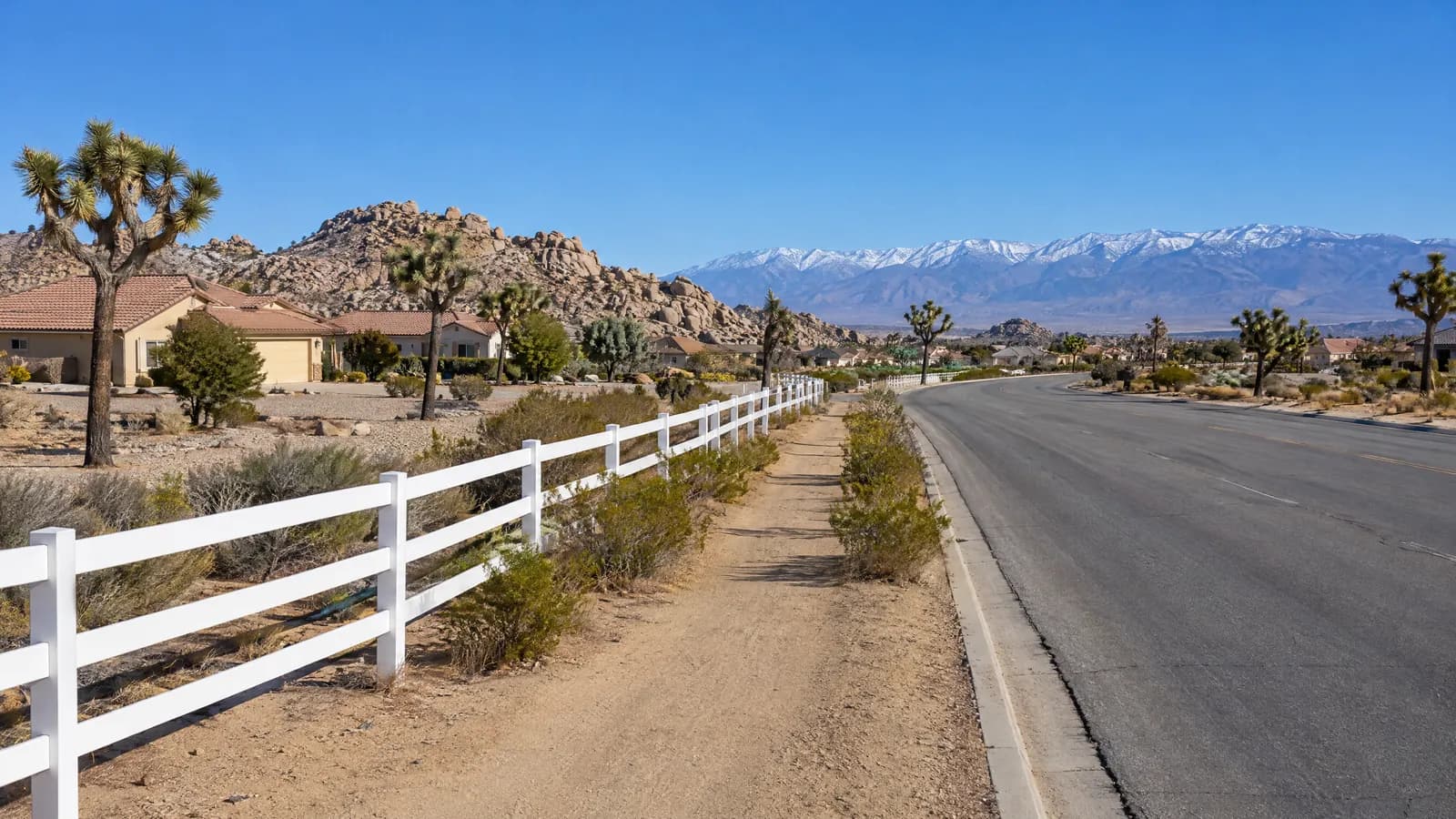
Apple Valley was planned to stay rural. Under Measure N, single-family zones require lots of at least 18,000 square feet, and horses are allowed in whole neighborhoods. Open desert, rocky hills and the Mojave River corridor run between the streets. That puts deer mice, pack rats and ground squirrels close to garages, barns and feed rooms, and outdoor cockroaches close to irrigated yards. PesPro serves the town from one office in El Monte, about 57 miles away; call to confirm your address is on our route.
QualityPro certified (National Pest Management Association)
Reputation
4.9 stars from 132 Google reviews · 15+ years in business
Hours
Mon–Fri 8AM–6PM, Sat 9AM–3PM · 24/7 emergency line
Apple Valley at a glance
About 75,500 residents and 25,800 homes; the median home was built in 1987, and roughly a third went up during the 1980s (US Census ACS 2020–2024).
About three in four homes are detached houses, and Measure N keeps lots in the Town's single-family zones at 18,000 square feet or more.
Roughly 30% of households rent: about 3,150 renter households live in detached houses and about 2,200 in duplexes, triplexes and fourplexes.
The Town's General Plan names deer mice, kangaroo rats, desert woodrats, ground squirrels, harvester ants, black widows and two scorpion species among Apple Valley's common wildlife.
On the valley floor, winter nights drop into the lower 20s and summer days commonly pass 100°F, according to the Town's General Plan.
County health inspectors closed four Apple Valley food businesses for cockroaches in 2021 and 2022, and a meat market twice for rodents in 2023.
About 22.5% of residents five and older speak Spanish at home; PesPro technicians work in English and Spanish.
Neighborhoods and landmarks we cover: The Village along Highway 18, Jess Ranch, the Deep Creek area south of Bear Valley Road, Bridle Path Estates and other equestrian streets, homes near the Mojave River on the west side, Bass Hill, Bell Mountain and The Knolls, the Horsemen's Center area, North Apple Valley near Apple Valley Airport.
Big lots on purpose: Measure N and a horse-friendly layout
The Town's General Plan ties Apple Valley's quality of life to its rural character. It defines that character as open space, large lots where horses are allowed and a network of multi-use trails. Measure N backs that up: lots in the Town's single-family zones must be at least 18,000 square feet. One land-use category, Estate Residential ¾, is designed specifically for animal keeping and encourages shared stables, corrals and show rings.
Horses run through the town's history as well. Apple Valley, incorporated in 1988, grew from ranches and guest ranches where visitors came to ride and attend rodeos. Today the Town-run Horsemen's Center still has two horse show arenas, perimeter trails and seven primitive campsites on 80 acres among rock formations.
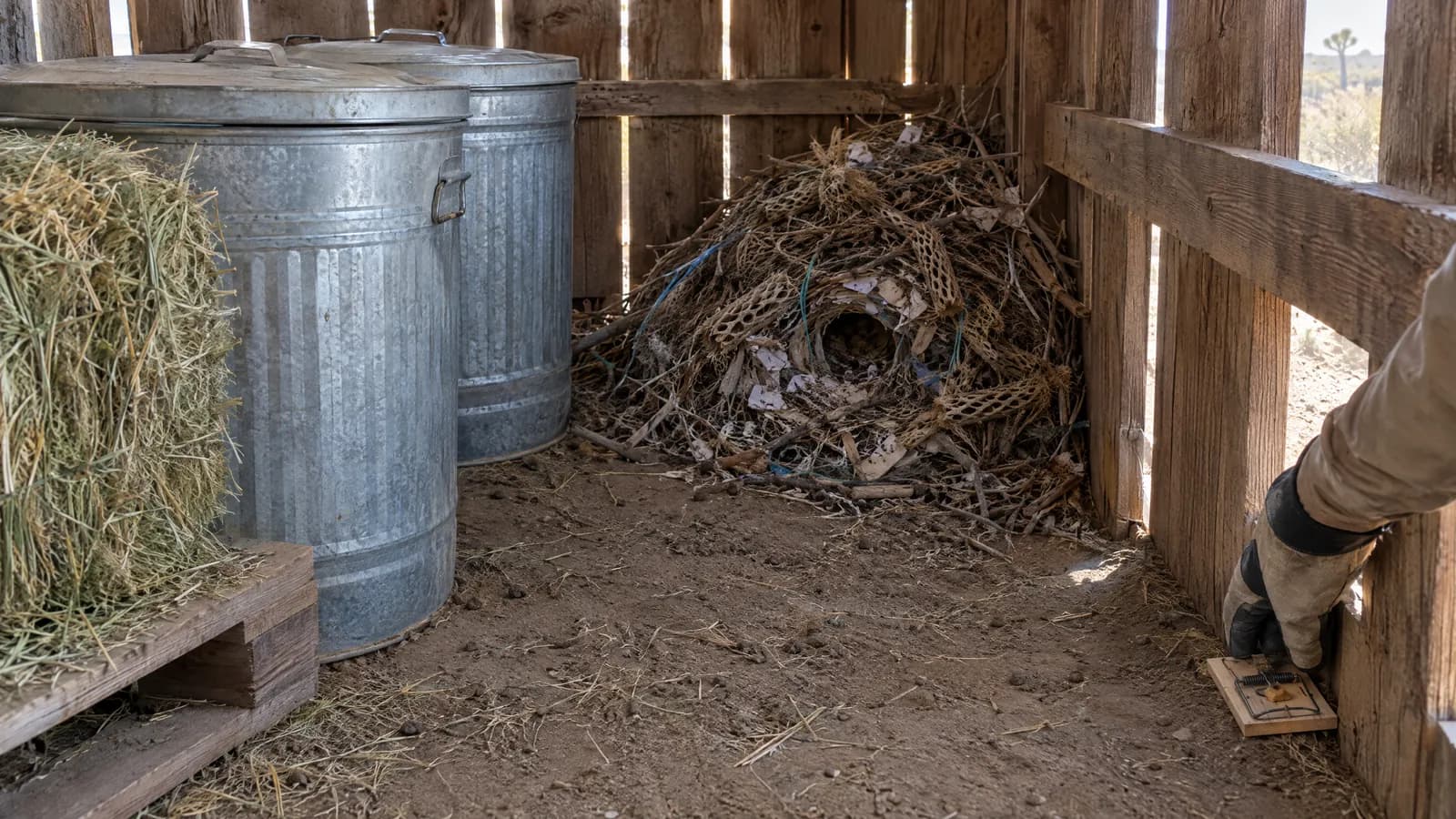
For pest control, the space between buildings matters as much as the buildings. Hay, grain and pet food kept in sheds and tack rooms feed rodents all year. Mice and rats also move easily between a barn and a house on the same lot. Our Apple Valley inspections cover outbuildings, feed storage and the edge of the lot, not only the rooms inside the house. [2][5][6]
The desert wildlife list in the Town's own plan
Apple Valley's General Plan includes an unusually specific inventory of the animals that share the town. Among the invertebrates it lists harvester and crater-nest ants, honey bees, sand and desert hairy scorpions, and black widows. Its mammal list includes deer mice, pocket mice, kangaroo rats, desert woodrats, Botta's pocket gophers, white-tailed antelope squirrels and California ground squirrels.
The plan also maps the corridors those animals travel. The Mojave River runs along the west side of town, with cottonwood and willow habitat near the Upper Narrows. A chain of hills links the open land, including Bass Hill, Bell Mountain, Catholic Hill and The Knolls. Homes that back onto those corridors, or onto any vacant desert lot, are likely to see rodents and spiders more often than homes inside a built-out tract.
Two notes on the eight-legged residents. UC IPM describes the western black widow as a common desert spider around homes, barns and rock walls. It reports that the brown widow had not settled in desert areas as of 2016. It also places the dangerous bark scorpion in California only near the Arizona border; ask us what the general pest program covers at your property. [3][19][21]
1980s houses, freezing nights and wind-blown sand
Census estimates put the median Apple Valley home at 1987. About 8,800 homes went up in the 1980s and another 5,200 in the 2000s, while only about 1,500 predate 1960. The town also has about 1,260 mobile homes. Houses now around 40 years old often need new door sweeps, garage-door seals and vent screens, and those worn spots are where mice slip in.
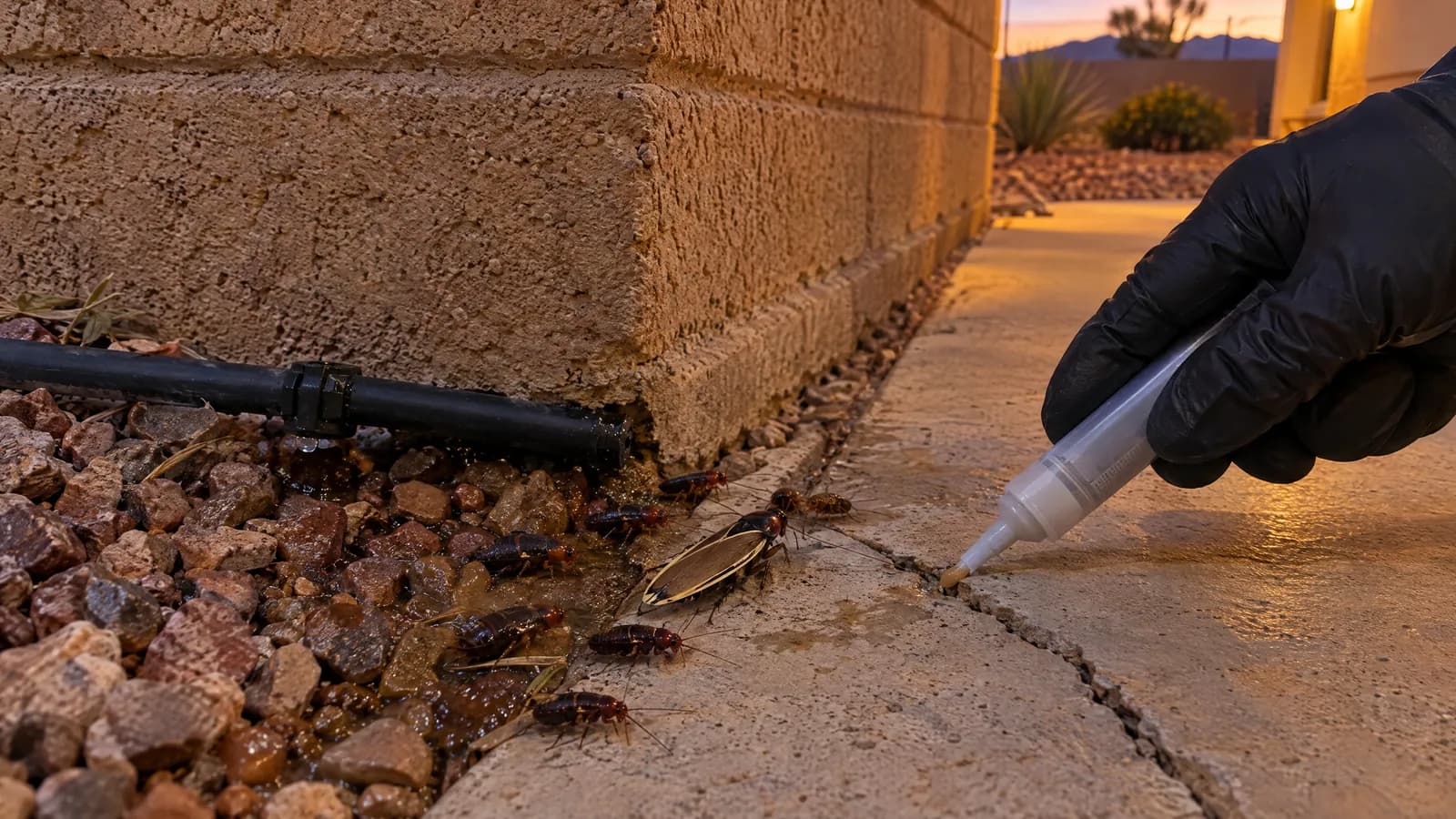
Weather adds pressure at both ends of the year. According to the Town's General Plan, winter nights on the valley floor fall into the lower 20s, summer days commonly pass 100°F, and frequent strong winds lift sand and dust. Cold nights push mice into garages, attics and stored vehicles in fall, while summer heat sends outdoor cockroaches toward irrigated beds, drains and the cool slab under a door. [1][4]
Mosquitoes, bees and who to call
Apple Valley is not part of a mosquito abatement district. The state's West Nile ZIP lookup lists the Town's own manager's office as the local contact for 92307 and 92308. The county's Mosquito and Vector Control Program does not list Apple Valley in its service area. The state's May 2026 list of invasive Aedes detections in San Bernardino County names no High Desert community.
West Nile virus has turned up next door: the state's 2026 dead-bird table lists two positive birds from Victorville. Its tables for 2021 through 2026 list none from Apple Valley. PesPro does not provide mosquito control. Questions about standing water or a neglected pool go to the Town at (760) 240-7000.
Bees are a different matter. UC IPM reports that Africanized honey bees have colonized every Southern California county. The Town's guidance tells residents to keep away from swarms and to call pest control or emergency services about a nest. We remove nests from walls, meter boxes and sheds, relocate live bees when that is feasible, and point out the openings to seal so new scouts do not move in. [12][8][14][13][20][7]
What county inspectors found along Highway 18 and Bear Valley Road
San Bernardino County posts letter grades in food businesses, from A for 90 to 100 points down to C for 70 to 79. A cockroach or rodent infestation, though, closes a business regardless of its grade. Weekly closure lists published by The Sun, built from county inspection data, show how that has played out in Apple Valley.
In September 2021 a restaurant on Apple Valley Road was closed twice for cockroaches, on the 7th and again on the 16th. That December a gas-station market on Rancherias Road was closed after an inspector counted more than ten live young roaches near its soda-syrup boxes. In March 2022 a Bear Valley Road restaurant was closed even though its invoices showed monthly roach treatments, and in August 2022 a teahouse on Highway 18 followed.
Rodents came next: a meat market on Outer Highway 18 was closed for a rodent infestation on February 6, 2023 and again on March 30, 2023. We found no later pest-related Apple Valley closure in the weekly lists we reviewed through October 2026. For food businesses, we schedule visits outside service hours and keep dated logs ready for the next inspection. [11][24][25][26][27][28][29]
Nights in the lower 20s send them into garages, tack rooms, RVs and stored feed
Pack rats (desert woodrats)
Year-round
Stick-and-debris nests in sheds, lumber piles and trailers that rarely move
Ground squirrels
Spring through fall
Burrows along slabs, block walls and irrigated landscaping
Turkestan & field cockroaches
May through September
Valve boxes, gravel beds and slab cracks; they wander in on warm nights
German cockroaches
Year-round
Kitchens in shared-wall rentals and food businesses on the main corridors
Black widows
Summer into fall
Garages, block walls, wood piles and barns
Harvester ants
Spring and summer
Cleared mounds in bare dirt and decomposed granite; they sting
Africanized honey bees
Spring swarm season
Wall voids, meter boxes and sheds; keep clear and call about the nest
Pest reports in and around Apple Valley
Public-health notices, vector-control alerts and local news we track for this area. Summaries are ours; follow each link for the original report.
· The Sun (Southern California News Group)
Roaches, broken pipe: Restaurant closures, inspections in San Bernardino County, Sept. 10-16
Weekly list based on county inspections: a restaurant on Apple Valley Road was closed Sept. 16, 2021 for a cockroach infestation after already being closed for roaches Sept. 7-8.
Roaches, sewage, no permit: Restaurant closures, inspections in San Bernardino County, March 3-10
A restaurant on Bear Valley Road in Apple Valley was closed March 3, 2022 for cockroaches even though invoices showed roach treatments at each of its last four monthly pest-control services.
· San Bernardino County Department of Public Health, Environmental Health Services · regional
ABC Retail Food Inspection Guide
Explains the county's letter grades (A 90–100, B 80–89, C 70–79) and states that a food facility with a cockroach or rodent infestation is closed regardless of its grade.
· California Department of Public Health · regional
County of Exposure for Reported Sin Nombre Virus Hantavirus Infections in California Residents, 1980–2025
California recorded 99 Sin Nombre hantavirus infections in residents from 1980 to 2025; two had their exposure traced to San Bernardino County, compared with 26 in Mono County.
Does PesPro really drive out to Apple Valley from El Monte?
Yes. Our only office is at 12207 Chosen St in El Monte, about 57 miles from Apple Valley in a straight line, so High Desert visits are planned as routes. Tell us your street address when you call and we will confirm it is on our route. Same-day visits may be possible for an extra fee.
Who do I call about mosquitoes or a green pool in Apple Valley?
Not PesPro: we do not provide mosquito control. Apple Valley is not inside a mosquito abatement district. The state's West Nile lookup lists the Town's manager's office as the local contact, so start with the Town at (760) 240-7000. Emptying buckets, plant saucers and trough overflow every week cuts breeding at home.
Can you take out a bee colony from my wall or meter box?
Yes. We remove established nests, treat so bees do not return to the same cavity, and arrange to relocate live bees when it is feasible. A swarm resting on a fence or tree often moves on within a few hours to a few days. Keep people and pets away, and call us if the bees start going into a structure.
Do you deal with snakes, coyotes or other wild animals?
No. Snakes, coyotes, kit foxes and other wild animals are outside our services; Apple Valley Animal Services (760-240-7555) or a licensed wildlife trapper can advise. What we do is make the property less inviting to the rodents those animals hunt, by sealing buildings and controlling mice and rats.
Should I worry about scorpions in Apple Valley?
The Town's General Plan lists sand and desert hairy scorpions among local wildlife. UC IPM says the desert hairy scorpion and the other common California species pose no real danger to most people. The bark scorpion, the one considered dangerous, lives in the state only near the Arizona border. Ask us what the general pest program covers at your property.
I rent a house in Apple Valley. Should I call you or my landlord?
Either of you can call us. Check your lease for who arranges pest service, and report the problem to the owner in writing. Under California Civil Code 1941.1, a rental can be considered untenantable if the landlord does not keep it clear of rodents and vermin. We can quote either the owner or the tenant.
Can a technician walk me through the plan in Spanish?
Yes. About 22.5% of Apple Valley residents speak Spanish at home, and every PesPro technician speaks English and Spanish, in person and by phone. Our website is also available in Spanish, Tagalog, Korean and Chinese, among other languages, although service itself is in English or Spanish.