West Nile Virus Activity 2026
As of the October 21, 2026 update, Northridge had 7 positive mosquito samples (first on June 11) and 3 positive dead birds (first on June 23).
Read the original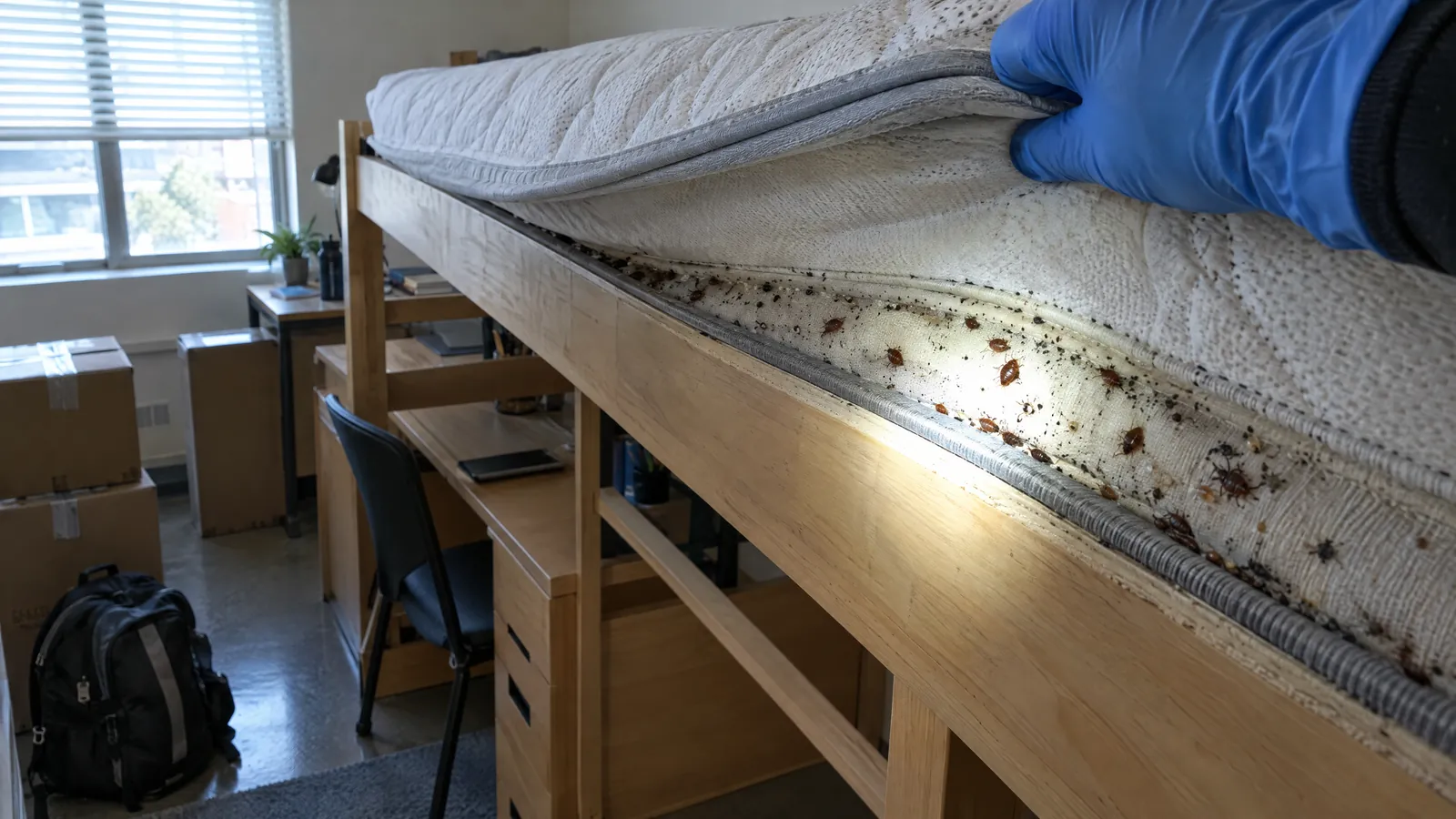
Northridge sits beside a university of about 40,000 students that can house fewer than 4,000 of them, surrounded by thousands of apartments in large complexes. Beds, couches and boxes are always on the move here, and bed bugs travel with them. We confirm the infestation, treat the rooms where people sleep and study, and schedule the paid return visits that catch late hatchlings.
CSUN listed 3,654 campus bed spaces for about 39,900 students in September 2026, so most of its students either commute or rent off campus.
Free quote and a written plan before any treatment
The university's September 2026 housing disclosure listed 3,654 bed spaces, about 39,900 students and a waitlist of 674 for the year. In ZIP code 91330, the campus itself, the Census counts about 2,500 residents, nearly all in group quarters such as residence halls.
UC researchers rank dormitories, furnished apartments and secondhand mattresses among the highest-risk settings for bed bugs. Near CSUN, that risk likely bunches up in late August and late May, when leases turn over, roommates swap rooms and furniture is passed along or left behind. A flashlight check of any used bed frame or couch before it comes inside takes five minutes. [5] [3] [26]
About 9,200 homes in ZIP codes 91324 and 91325 are in buildings with 20 or more units, and more than half of all households rent. In complexes that size, bed bugs can follow wiring and pipes or slip under doors into hallways. An infestation that starts in one apartment can turn up two doors away weeks later.
For managers, we work unit by unit. We inspect the reported apartment and the ones beside, above and below it, treat the confirmed units and date every record. Tenants get a written prep list, and our technicians can walk through it in English or Spanish. [1] [2]
A mattress dumped in an alley can reinfest whoever drags it home next. UC IPM advises taking infested items straight to disposal or clearly marking them so no one reuses them. We suggest sealing a mattress or couch in plastic before it leaves the room, so bugs do not drop off in hallways or stairwells.
For houses and buildings of up to four units, LA Sanitation picks up mattresses on trash day if you schedule at least one business day ahead. Larger complexes are served by recycLA haulers instead, so tenants should ask the manager. LA Sanitation also runs a monthly drop-off day at its West Valley yard, 8840 Vanalden Ave in Northridge. [26] [24] [25]
PesPro combines residual insecticide applications with a fungal biopesticide, Beauveria bassiana, which infects bugs that walk across treated surfaces. We do not heat or freeze rooms or tent the building. Prep matters as much as product: clothes and linens bagged and laundered, clutter cleared from under beds, and furniture pulled away from walls.
Bed bug eggs hatch in about 10 to 15 days at room temperature, so a single visit rarely reaches every bug. Follow-up visits are separate, paid visits built into your quoted plan, and we tell you how many to expect before you book. [26]
We find live bugs, eggs or fresh spotting before recommending a plan, then map which rooms and units are involved.
Once the written prep list is done, residual and fungal products go into seams, frames, baseboards and outlets where bugs hide.
Paid follow-up visits, timed around the egg hatch window, re-check treated rooms and retreat where activity remains.
Public-health notices, vector-control alerts and local news we track for this area. Summaries are ours; follow each link for the original report.
As of the October 21, 2026 update, Northridge had 7 positive mosquito samples (first on June 11) and 3 positive dead birds (first on June 23).
Read the originalNorthridge's 8 positive mosquito samples (first on July 15, 2024) were the highest count of any community in the district's 2024 table, which totaled 132.
Read the originalCompiles county closures; a restaurant at 17019 Roscoe Blvd in Northridge was closed for a vermin infestation from April 22 to April 26, 2025.
Read the originalReports a June 12, 2025 county inspection of a restaurant at 9305 Reseda Blvd that found live insects and rodents and led to a temporary closure.
Read the originalThe county's first 2026 West Nile death was a San Fernando Valley resident, and half of the 15 county infections reported to that date were in the Valley.
Read the originalYes. People react to bites very differently, and some never show a mark. Bed bugs in a shared apartment move between rooms, so every room in the unit should be prepared and inspected during the same visit.
It is possible, but far less common than picking them up from used furniture, luggage or an overnight stay. Keep backpacks off the bed, and inspect any secondhand mattress, frame or couch closely before it comes inside.
Wrap it in plastic, mark it as infested and schedule a pickup instead of leaving it on the sidewalk. Houses and small buildings use LA Sanitation's bulky item service; residents of larger complexes should ask the manager, because those buildings use recycLA haulers.
No. Our treatments combine residual insecticides with a fungal biopesticide, applied where bed bugs hide. Thorough prep and the paid follow-up visits in your plan are what make this approach work.
Most need an initial treatment plus at least one follow-up, because eggs can hatch 10 to 15 days later. Each follow-up is a separate paid visit, and the number we expect is written into your quote.
Yes. In multi-unit buildings we document each inspection, treatment and prep check by unit and date, which helps managers track progress and answer tenant questions.
Bed bugs reach Northridge homes as passengers: in a suitcase after a hotel stay, inside a secondhand couch, in a guest's bag, or through a shared wall along pipes and wiring. Once inside they stay within a few feet of where people sleep, in mattress piping, box-spring joints and couch seams.
Southern California's mild climate removes the winter pause. Indoor temperatures between 70 and 82 degrees keep eggs hatching in roughly two weeks and nymphs maturing all year, so an infestation that starts in autumn is well established by spring.
A technician first checks beds, frames, headboards, upholstered furniture, baseboards and outlet plates for live bugs, eggs, cast skins and dark fecal spotting, and rules out carpet beetles and fleas. The written quote is free and follows the inspection, because room count and infestation depth set the scope.
Residual chemical applications then go into the seams, cracks, frame joints and voids where every life stage shelters, never broadcast over bedding. A fungal application covers the routes bed bugs travel to the bed, so bugs resistant to common insecticides still carry spores home. A paid follow-up visit is scheduled around the egg hatch.
Bag bedding and clothing inside the affected room, wash hot and dry at least 30 minutes, and keep clean items sealed until cleared. Bag floor clutter and leave it in the room to be treated. Empty nightstands, pull the bed from the wall, vacuum the seams and put the sealed vacuum bag in an outdoor bin.
Do not fog or spray beforehand; it scatters bugs into the walls and the next room. Do not discard the mattress before the inspection; most can be treated and encased. Seeing a few bed bugs in the first two weeks is normal: eggs already in the cracks keep hatching.
Every PesPro service carries a 30-day guarantee, and bed bugs sit in the strongest tier: if bed bugs reappear within 30 days of your treatment, PesPro returns for a third visit at no extra cost. For most other pests, a return visit inside that window costs 30% of the original price.
The quote is free, written after the inspection and never over the phone. It reflects how many rooms and furniture pieces are involved and how established the infestation is; follow-ups are listed as separate paid visits. Northridge multi-unit buildings are quoted per door, with rates that fall as the building grows.
Same-day service is available for an extra fee. It earns its cost when live bugs show in more than one room, when infants or older adults sleep in the home, or when a rental or short-term unit must be turned over quickly. The emergency line, (323) 472-5329, answers around the clock.
California's bed bug rules for rental housing, as summarized by the state Department of Public Health, require a written bed bug notice for new tenants, inspection findings shared with tenants in writing within two business days, notice to all tenants when common areas are infested, and no renting of a unit known to be infested. That is general information, not legal advice.
PesPro's multi-unit work is built around that paperwork: units beside, above and below a reported unit are inspected in the same visit, each unit is documented for the manager's file, and tenant-notification templates and digital service logs are available to HOA boards and health inspectors. More than 500 multi-unit properties run on this routine.
Not entirely. The first visit treats adults, nymphs and reachable eggs, but eggs glued deep in cracks keep hatching for about two weeks. The paid follow-up is timed for that hatch and retreats wherever live bugs remain.
The scheduled follow-up is a separate paid visit. The 30-day guarantee is different: if bed bugs reappear within 30 days of your service, the third visit is included at no extra cost. Both are written into the quote.
The inspection decides. If evidence is limited to one sleeping area, a narrower scope goes into the quote. If bugs show in a second room or a couch, treating one spot leaves a reservoir that reinfests the first.
Written inspection findings in time to share with the tenant within two business days, a record of which units were inspected and treated, and templates for the notices California requires. A certificate of insurance is available on request.
When live activity is confirmed, yes: every night of delay means more feeding, more eggs and more belongings exposed. With bites but no evidence, a standard inspection appointment costs less and answers the real question first.
PesPro technicians, licensed under California Structural Pest Control Board license PR-6378, from a Latino family business founded in 2011 in El Monte. Service is bilingual in English and Spanish, visits are kept discreet, and the company is QualityPro certified.

24/7 Emergency response available throughout Los Angeles County and San Bernardino County
Same-day service available for an extra fee • Licensed & Insured • QualityPro Certified