Retail Food Facility Closure/Re-Opening Report, Oct 5–11, 2025
Official county report listing a restaurant on S. Baldwin Ave, Arcadia 91007, closed for vermin infestation on October 3, 2025 and reopened October 10, 2025.
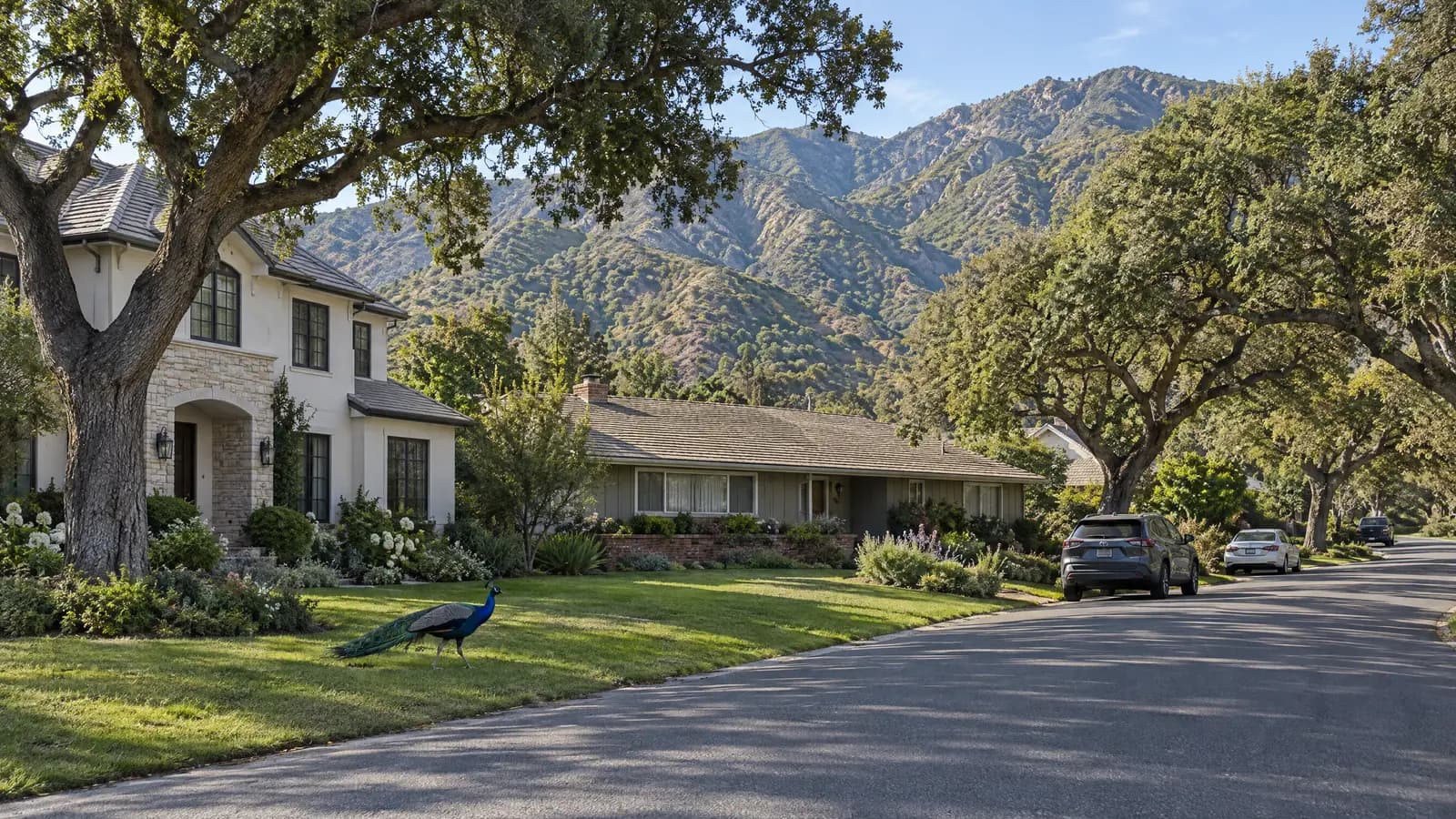
Arcadia's tree canopy is part of its character and part of its rat problem. Roof rats use oaks, vines and fence tops to reach the roof, then settle in attics, garages and pool equipment. We trap the rodents already inside, seal their openings with metal and help you remove what feeds them.
Under Arcadia's tree rules, pruning a protected oak or sycamore requires a written recommendation from a certified arborist, so cutting back a rat route takes planning.
Free quote and a written plan before any treatment
Arcadia's design guidelines describe Residential Estates lots of 22,000 square feet or more, where mature trees are prevalent. Very low density lots run 10,000 to 22,000 square feet. On lots that size there is a lot of canopy, hedge and shaded ground between the street and the roof.
UC Integrated Pest Management notes that roof rats thrive in neighborhoods with mature landscaping and routinely travel 300 feet or more for food. A rat may nest in one yard and feed in another. That is why we inspect the whole lot, including fences, utility lines and any guest house, garage or shed. [2] [20]
The city protects coast live and Engelmann oaks with trunks over 4 inches across, other oaks over 12 inches and sycamores over 6 inches. Its code says pruning a protected tree needs no permit, but it must follow arborist standards and have a certified arborist's written recommendation. Removing a whole limb requires the arborist on site.
UC researchers advise cutting back limbs within six feet of a roof. In Arcadia we do not cut. We photograph and list the branches rats are using, so your arborist can decide what can go. Meanwhile we close the openings at the roofline the branch leads to. [6] [5] [20]
The city's design guidelines encourage clinging vines, shrubs and trees to soften walls and fences. UC IPM warns that climbing ivy, star jasmine and honeysuckle on fences or buildings invite roof rats, and recommends thinning them. A vine-covered wall can be kept, as long as it is trimmed back from the eaves and checked for nests.
Food matters as much as cover. UC advises picking up fallen fruit and nuts, storing pet food in rodent-proof containers and keeping tight lids on bins. Covering a mother bear and two cubs at the Arboretum in 2022, NBC Los Angeles noted that foothill bears also eat trash from bins. [2] [20] [9]
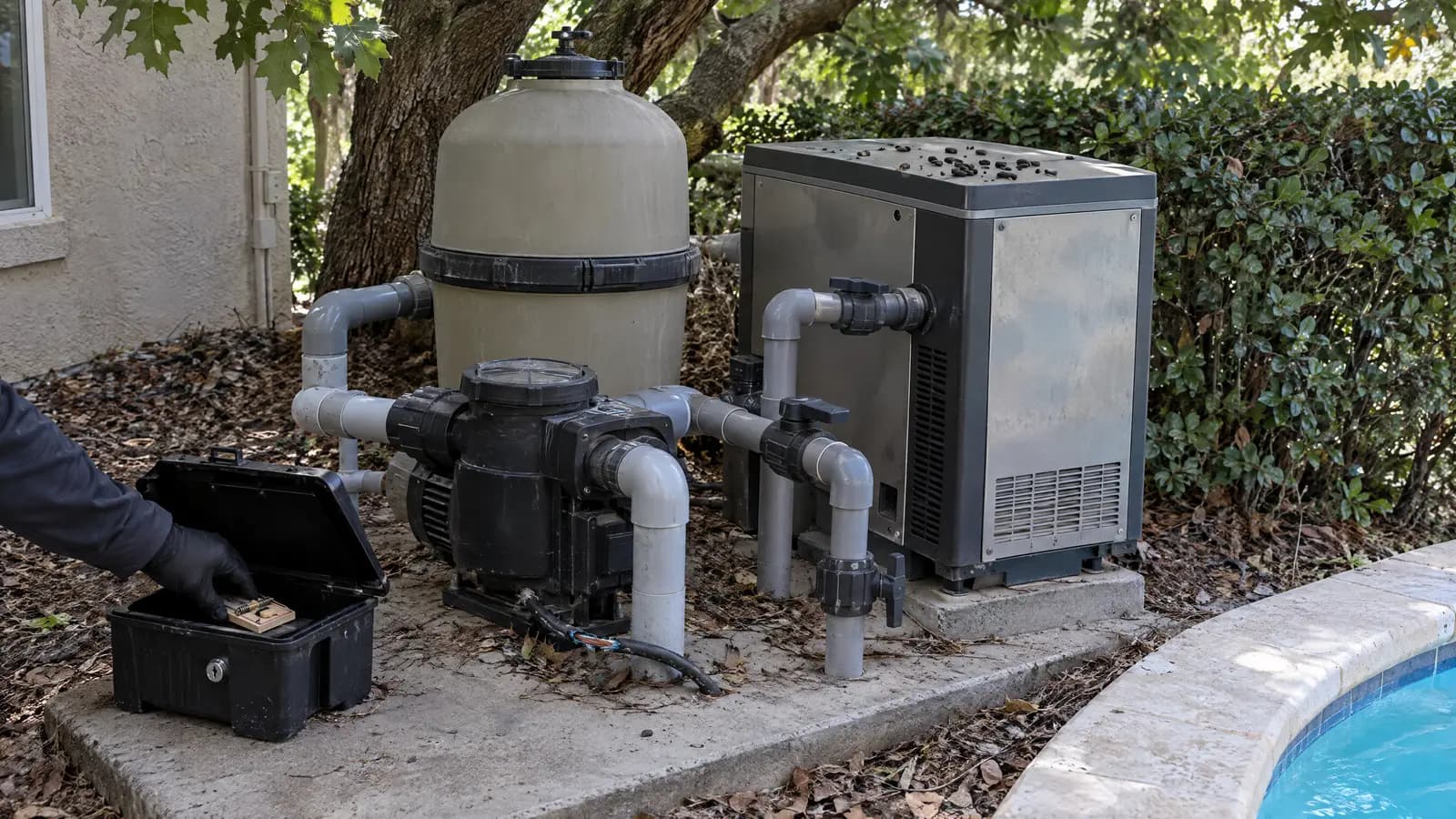
Among the warning signs UC researchers list is a drowned rat in a swimming pool or hot tub. Where pool equipment sits under hedges or trees, the warm housings, wiring and shelter make a quiet stop. Rats gnaw wiring, plastic and wood, so we check equipment pads, heater housings and the garage, where UC notes rats nest behind boxes. [20]
The San Gabriel Valley vector control district, which serves Arcadia, says it does not respond to rodents. It refers residents to the county Vector Management Program at (626) 430-5461 for public health questions. Private trapping and sealing is where PesPro comes in.
Los Angeles County recorded a record 220 flea-borne typhus cases in 2025 and 109 more by late September 2026. These are county-wide figures, not Arcadia ones, and the fleas travel on rats, stray cats and opossums. After trapping we remove droppings and nesting material we can reach, sanitize the area and suggest year-round flea control for pets. [15] [22] [23]
We follow rat signs from the trees and fences to the roofline, attic, garage, guest house and pool equipment.
Snap traps in secured stations for rodents already inside, while entry points are closed with galvanized mesh, hardware cloth and sheet metal.
Droppings and nesting material removed where accessible, affected areas sanitized and monitoring set, as a one-time job or an ongoing program.
Public-health notices, vector-control alerts and local news we track for this area. Summaries are ours; follow each link for the original report.
Official county report listing a restaurant on S. Baldwin Ave, Arcadia 91007, closed for vermin infestation on October 3, 2025 and reopened October 10, 2025.
As of October 19, 2026: six West Nile–positive mosquito samples in Arcadia, first detected August 18, out of 219 district-wide.
Read the originalVisitors were asked to leave the Arboretum while a mother black bear and two cubs wandered the grounds; bears forage in foothill neighborhoods when natural food is scarce.
Second county outbreak of 2026, with 109 cases county-wide so far that year; the fleas are carried by rats, stray cats and opossums.
No. In Arcadia, pruning a protected oak or sycamore needs a certified arborist's written recommendation, and removing a whole limb needs the arborist on site. We list and photograph the branches rats use, seal the roofline they lead to and leave the cutting to your arborist.
UC researchers list it as a sign that rats live on or near the property. It usually means roof rats are traveling through trees, hedges or fences around the pool. We inspect the equipment pad, garage and roofline to find where they nest and how they get in.
Under Arcadia's tree canopy, roof rats are the usual culprit, because they climb and nest in trees, vines and attics. Norway rats burrow along foundations and under debris. Droppings, burrows and entry points tell us which one we are dealing with.
No. Bears are wildlife and outside our work. The rodent side still helps, though: bins with tight lids, fallen fruit picked up and pet food stored indoors take away food that rats use too.
Our plans rely on snap traps in locked stations and on sealing openings. When bait is used outdoors, UC notes that California requires tamper-resistant stations wherever children, pets or birds could reach it. In yards that peafowl wander through, we keep bait out of the plan.
Yes. For rodents, cockroaches and bed bugs, our guarantee adds a third visit at no extra cost within 30 days. Same-day service is available as an option for an extra fee, and the written quote before any work is free.
Three rodents account for nearly every call in Arcadia, and they live differently. Roof rats climb into attics, trees, ivy and fence tops and eat backyard citrus and avocados on the tree. Norway rats burrow along foundations and under sheds. House mice live indoors, rarely more than about 30 feet from the nest.
Mild winters mean none of them hibernate, and the first cool nights and autumn rains push rats indoors. Older housing supplies the openings: any gap wider than a quarter inch at a vent screen, eave board, utility line or door threshold is enough.
The inspection covers attic, crawl space, garage, kitchen and yard, reading droppings, rub marks, gnawing and burrows to confirm which species is active and where it travels. Traps go on those routes: fastened to beams for roof rats, tight against walls for Norway rats, closely spaced for mice.
Indoors the program leans on snap traps rather than poison, following LA County guidance, because a poisoned rodent that dies inside a wall leaves odor and flies. Monitoring visits reset traps, remove what was caught and compare activity with the last visit so placements move as the rodents do. Sealing openings is Rodent Exclusion, a separate add-on.
Before the technician arrives at your Arcadia address, clear access to the attic hatch, under-sink cabinets and garage walls, and raise stored boxes so runways show. Pick up fallen fruit and bring pet food in at night. Do not set out poison first: it hides evidence and risks a dead rat in the wall.
Rats are wary of new objects and may ignore traps for days or weeks, so early visits leave traps baited but unset until the bait disappears. Catches and quieter nights follow; monitoring continues because new rats replace caught ones while fruit, ivy and open gaps remain. Never sweep droppings dry: glove up, soak with disinfectant, wipe, double-bag.
Every PesPro service carries a 30-day guarantee, and rodents sit in the strongest tier with bed bugs and cockroaches: if rats or mice reappear within 30 days of a service, PesPro returns for a third visit at no extra cost, where other pests would pay 30% of the original price for a return visit.
The quote is free and written after the inspection. Rodent control is priced by property size, activity found and how often visits are needed; exclusion is priced separately by the number and type of openings to seal. Trapping alone or sealing: the inspection says which.
Same-day service is available for an extra fee. It makes sense when rats are inside the living space, when wiring has been gnawed, when a Arcadia food business has an inspection pending, or when a tenant complaint has started a habitability clock. Call (323) 472-5329 any hour, or the office and WhatsApp line, (323) 303-3522, in business hours.
The LA County Department of Public Health reported record flea-borne typhus cases in 2025, ties the fleas to rats, free-roaming cats and opossums, and recommends controlling fleas before or alongside trapping where typhus is a concern. For landlords, California Civil Code 1941.1 lists vermin-free premises among habitability duties, so dated service records matter.
PesPro's program keeps digital service logs that Arcadia owners, HOA boards and inspectors can open any time, same-day compliance documentation when a citation is at stake, tenant-notification templates and consolidated invoicing for multi-site portfolios. Over 15 years the company has protected more than 10,000 properties, more than 500 of them multi-unit.
A house mouse weighs about half an ounce and stays within 30 feet of its nest. Rats weigh 5 to 18 ounces: a roof rat's tail is longer than its body and it favors attics; a Norway rat is stockier and burrows.
Rats avoid new objects and can ignore a trap for days or weeks; floor traps also miss roof rats traveling beams and pipes. If a trap line stays untouched past the second visit, placements move.
Sealing is Rodent Exclusion, a separate add-on and structural work: vents, utility penetrations, foundation cracks and roofline gaps closed with metal mesh, sheet metal or concrete. The inspection lists the openings found and quotes exclusion on its own line.
If rodent activity reappears within 30 days of a service, PesPro returns for a third visit at no extra cost. The exact wording is on your quote, next to the monitoring schedule.
The default indoors is snap traps, because a poisoned rodent can die inside a wall or ceiling. Bait stations are locked, tamper-resistant and placed where children and pets cannot reach them. Tell the technician about pets before placement.
When droppings appear where food is prepared for infants or vulnerable adults, when rats are in living areas, or when a health inspection or tenant complaint sets a deadline. For attic noises alone, a regular appointment follows the same plan.
24/7 Emergency response available throughout Los Angeles County and San Bernardino County
Same-day service available for an extra fee • Licensed & Insured • QualityPro Certified