West Nile Virus Activity 2025 (as of 12/20/2025)
Hawthorne recorded the district's only West Nile–positive dead bird of 2025, first detected August 26; Lawndale had two positive sentinel chickens.
Read the original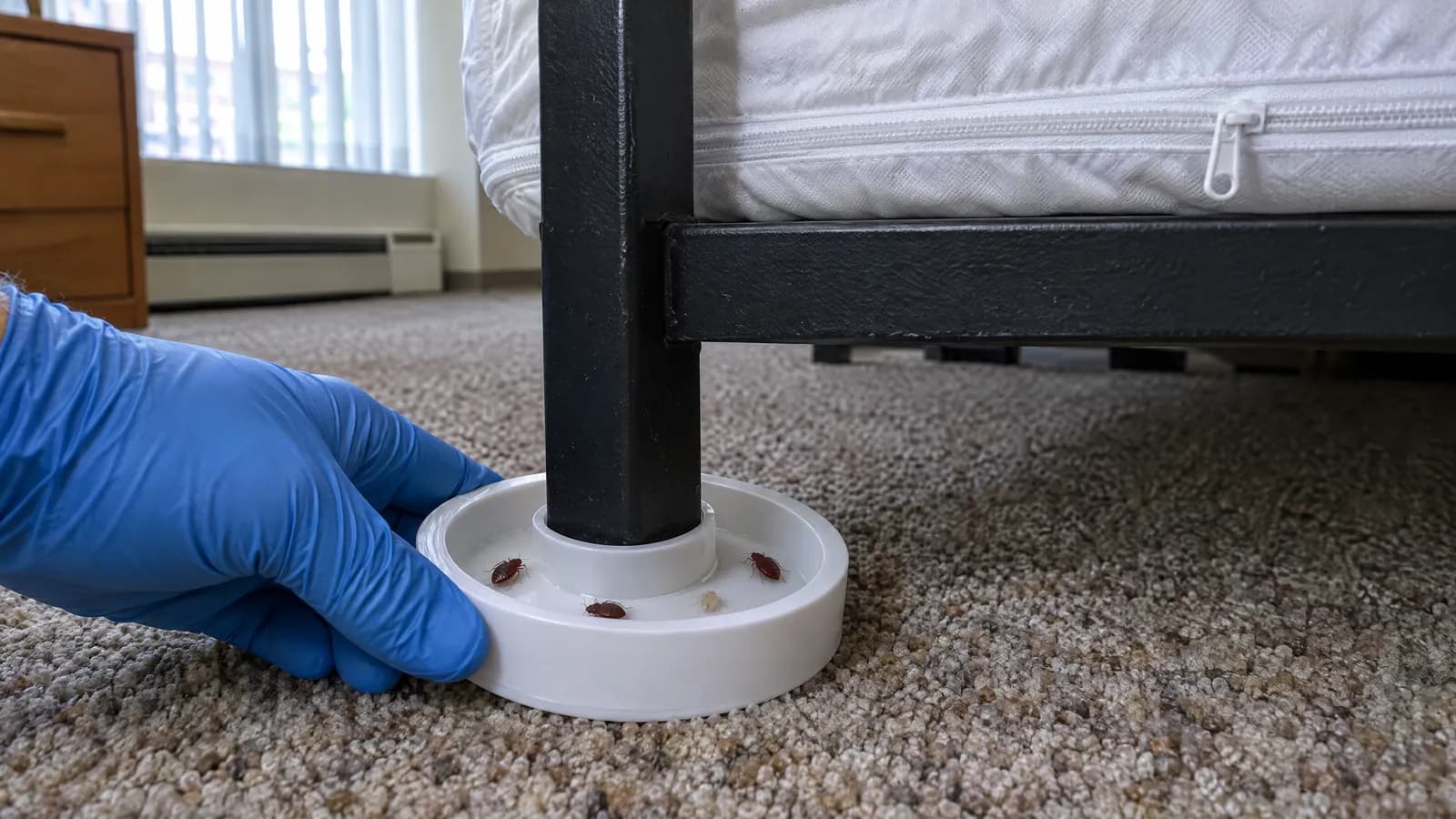
In a large Hawthorne complex, a bed bug report from one unit is really a question about the building. We confirm the infestation, map which neighboring units need a look, treat with a residual chemical and a fungal biopesticide, and document every unit for the manager.
About 4,000 Hawthorne homes are in complexes of 50 or more units, and about 5,600 more are in buildings of 20 to 49 units (Census ACS 2020–2024).
Free quote and a written plan before any treatment
Census estimates count about 9,700 Hawthorne homes in buildings of 20 or more units, close to a third of the housing stock. In buildings that large, bed bugs can travel between units through hallways, shared laundry rooms and furniture moves. One treated apartment does little if the unit next door is still active.
California Civil Code section 1954.604 lets the pest control operator choose which units to inspect. Entry for those inspections, and for follow-ups in surrounding units until the bugs are gone, counts as a necessary service. Tenants must cooperate and share the information the operator needs.
Our multi-unit protocol follows that logic. We inspect the reported unit and its neighbors and treat where we confirm activity. A record for each unit shows the manager what was found, what was done and what comes next. [1] [15]
Hawthorne has about 21,900 renter households, and Census estimates put about 1,300 units vacant. Renter-heavy complexes likely see frequent move-ins and move-outs. UC IPM lists secondhand mattresses and furniture among the high-risk sources of bed bugs and says infested discards should go straight to the dump or be clearly marked.
A couch left beside a trash enclosure can carry bed bugs into the next apartment that takes it. Empty units are not automatically clear either, because UC IPM reports bed bugs can survive 20 to 400 days without feeding. An inspection before a new tenant moves in is worth considering after any bed bug report in the building. [1] [20]
LA County Public Health's housing inspectors respond to complaints about insect and rodent infestations in apartment buildings. After an initial complaint, the county sends the owner a Courtesy Notice to Abate that lists the alleged violations and sets a compliance date 21 days out.
Three weeks usually leaves room for an inspection, prep and a first treatment, with a written record, if the owner calls early. We give managers prep checklists in English and Spanish to pass to tenants. Treatment pairs a residual chemical with Beauveria bassiana, a fungal biopesticide, and follow-up visits are separate paid visits in the quoted plan. [2]
We confirm bed bugs in the reported unit, then check the units the manager authorizes on each side, above and below.
Tenants follow a written prep checklist, then we apply a residual chemical and a Beauveria bassiana biopesticide where bugs hide.
Paid follow-up visits re-check every treated unit and retreat where activity remains, until the building plan is complete.
Public-health notices, vector-control alerts and local news we track for this area. Summaries are ours; follow each link for the original report.
Hawthorne recorded the district's only West Nile–positive dead bird of 2025, first detected August 26; Lawndale had two positive sentinel chickens.
Read the originalRelays the city's announcement that demolition at 12124 Hawthorne Blvd must begin by August 14, 2026, in phases from south to north, with haul trucks routed through West 120th Street.
Read the originalA court gave the owners of the Hawthorne Plaza mall, vacant for nearly 30 years, one year to redevelop or demolish it and required fencing, daily cleanup and security; the city's 2021 lawsuit cited illegal dumping and other hazards.
Read the originalThe Hawthorne row of the state table lists Aedes aegypti as present and Aedes albopictus as not found.
Read the originalRecord 220 county cases in 2025 (187 in 2024), with localized outbreaks investigated in Central Los Angeles, Santa Monica and unincorporated Willowbrook; infected fleas ride on rats, stray cats and opossums and reach homes on pets.
Read the originalUnder California Civil Code section 1954.604, the pest control operator selects the units to inspect, and entry follows the state's usual notice rules for landlords. We typically recommend the units on each side, above and below, plus any with recent complaints.
Yes. Section 1954.604 says tenants shall cooperate and give the pest control operator the information needed to detect and treat bed bugs. Our plans also require prep before treatment, and we provide the checklist in English or Spanish.
We would not. UC IPM lists secondhand mattresses and furniture among the riskiest ways bed bugs travel. If it is already inside, keep it in one room, check the seams and joints with a flashlight and call us before the bugs spread.
No. We do not heat rooms, steam furniture or tent buildings. Our treatments combine a residual chemical with a Beauveria bassiana fungal application, which reaches eggs, nymphs and adults when paired with prep and follow-up visits.
Each treated unit gets its own follow-up schedule, timed to catch eggs that hatch after the first visit. Follow-ups are separate paid visits in the quoted plan, and the manager receives updated records after every round.
Yes. Prep checklists come in English and Spanish, and our technicians explain them in either language. Tenants who read Tagalog or Vietnamese can also review general information on our website in those languages.
Bed bugs reach Hawthorne homes as passengers: in a suitcase after a hotel stay, inside a secondhand couch, in a guest's bag, or through a shared wall along pipes and wiring. Once inside they stay within a few feet of where people sleep, in mattress piping, box-spring joints and couch seams.
Southern California's mild climate removes the winter pause. Indoor temperatures between 70 and 82 degrees keep eggs hatching in roughly two weeks and nymphs maturing all year, so an infestation that starts in autumn is well established by spring.
A technician first checks beds, frames, headboards, upholstered furniture, baseboards and outlet plates for live bugs, eggs, cast skins and dark fecal spotting, and rules out carpet beetles and fleas. The written quote is free and follows the inspection, because room count and infestation depth set the scope.
Residual chemical applications then go into the seams, cracks, frame joints and voids where every life stage shelters, never broadcast over bedding. A fungal application covers the routes bed bugs travel to the bed, so bugs resistant to common insecticides still carry spores home. A paid follow-up visit is scheduled around the egg hatch.
Bag bedding and clothing inside the affected room, wash hot and dry at least 30 minutes, and keep clean items sealed until cleared. Bag floor clutter and leave it in the room to be treated. Empty nightstands, pull the bed from the wall, vacuum the seams and put the sealed vacuum bag in an outdoor bin.
Do not fog or spray beforehand; it scatters bugs into the walls and the next room. Do not discard the mattress before the inspection; most can be treated and encased. Seeing a few bed bugs in the first two weeks is normal: eggs already in the cracks keep hatching.
Every PesPro service carries a 30-day guarantee, and bed bugs sit in the strongest tier: if bed bugs reappear within 30 days of your treatment, PesPro returns for a third visit at no extra cost. For most other pests, a return visit inside that window costs 30% of the original price.
The quote is free, written after the inspection and never over the phone. It reflects how many rooms and furniture pieces are involved and how established the infestation is; follow-ups are listed as separate paid visits. Hawthorne multi-unit buildings are quoted per door, with rates that fall as the building grows.
Same-day service is available for an extra fee. It earns its cost when live bugs show in more than one room, when infants or older adults sleep in the home, or when a rental or short-term unit must be turned over quickly. The emergency line, (323) 472-5329, answers around the clock.
California's bed bug rules for rental housing, as summarized by the state Department of Public Health, require a written bed bug notice for new tenants, inspection findings shared with tenants in writing within two business days, notice to all tenants when common areas are infested, and no renting of a unit known to be infested. That is general information, not legal advice.
PesPro's multi-unit work is built around that paperwork: units beside, above and below a reported unit are inspected in the same visit, each unit is documented for the manager's file, and tenant-notification templates and digital service logs are available to HOA boards and health inspectors. More than 500 multi-unit properties run on this routine.
Not entirely. The first visit treats adults, nymphs and reachable eggs, but eggs glued deep in cracks keep hatching for about two weeks. The paid follow-up is timed for that hatch and retreats wherever live bugs remain.
The scheduled follow-up is a separate paid visit. The 30-day guarantee is different: if bed bugs reappear within 30 days of your service, the third visit is included at no extra cost. Both are written into the quote.
The inspection decides. If evidence is limited to one sleeping area, a narrower scope goes into the quote. If bugs show in a second room or a couch, treating one spot leaves a reservoir that reinfests the first.
Written inspection findings in time to share with the tenant within two business days, a record of which units were inspected and treated, and templates for the notices California requires. A certificate of insurance is available on request.
When live activity is confirmed, yes: every night of delay means more feeding, more eggs and more belongings exposed. With bites but no evidence, a standard inspection appointment costs less and answers the real question first.
PesPro technicians, licensed under California Structural Pest Control Board license PR-6378, from a Latino family business founded in 2011 in El Monte. Service is bilingual in English and Spanish, visits are kept discreet, and the company is QualityPro certified.

24/7 Emergency response available throughout Los Angeles County and San Bernardino County
Same-day service available for an extra fee • Licensed & Insured • QualityPro Certified