West Nile Virus Activity 2025 (as of 12/20/2025)
Hawthorne recorded the district's only West Nile–positive dead bird of 2025, first detected August 26; Lawndale had two positive sentinel chickens.
Read the original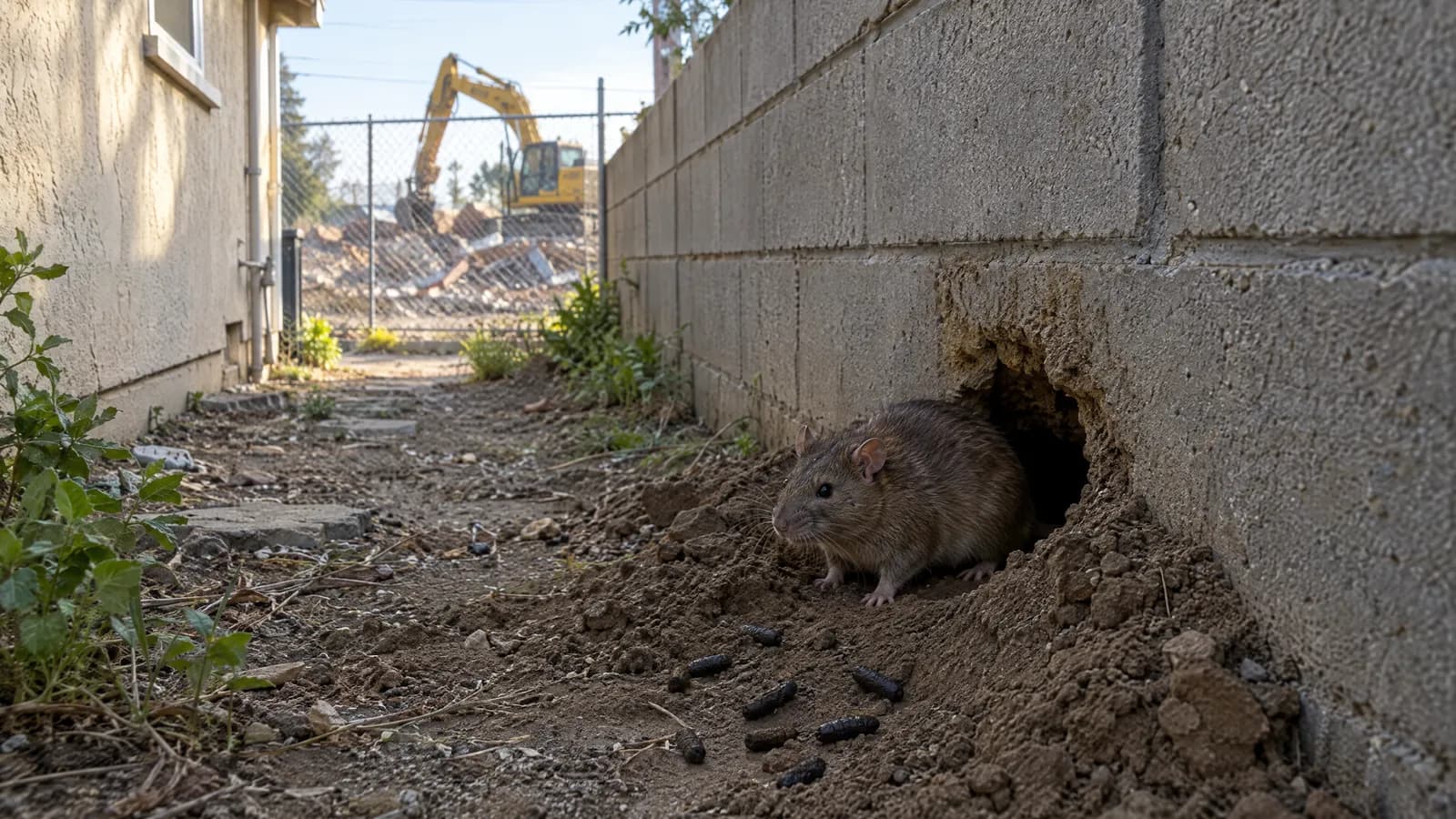
Rodent problems in Hawthorne often start outdoors: in trash enclosures, along block walls, under carports and around a long-vacant mall ordered torn down. We trap what is already inside, seal buildings with durable materials and help owners keep the grounds unattractive to rats.
A court order required demolition of the vacant Hawthorne Mall, a full block of Hawthorne Boulevard, to begin by August 14, 2026.
Free quote and a written plan before any treatment
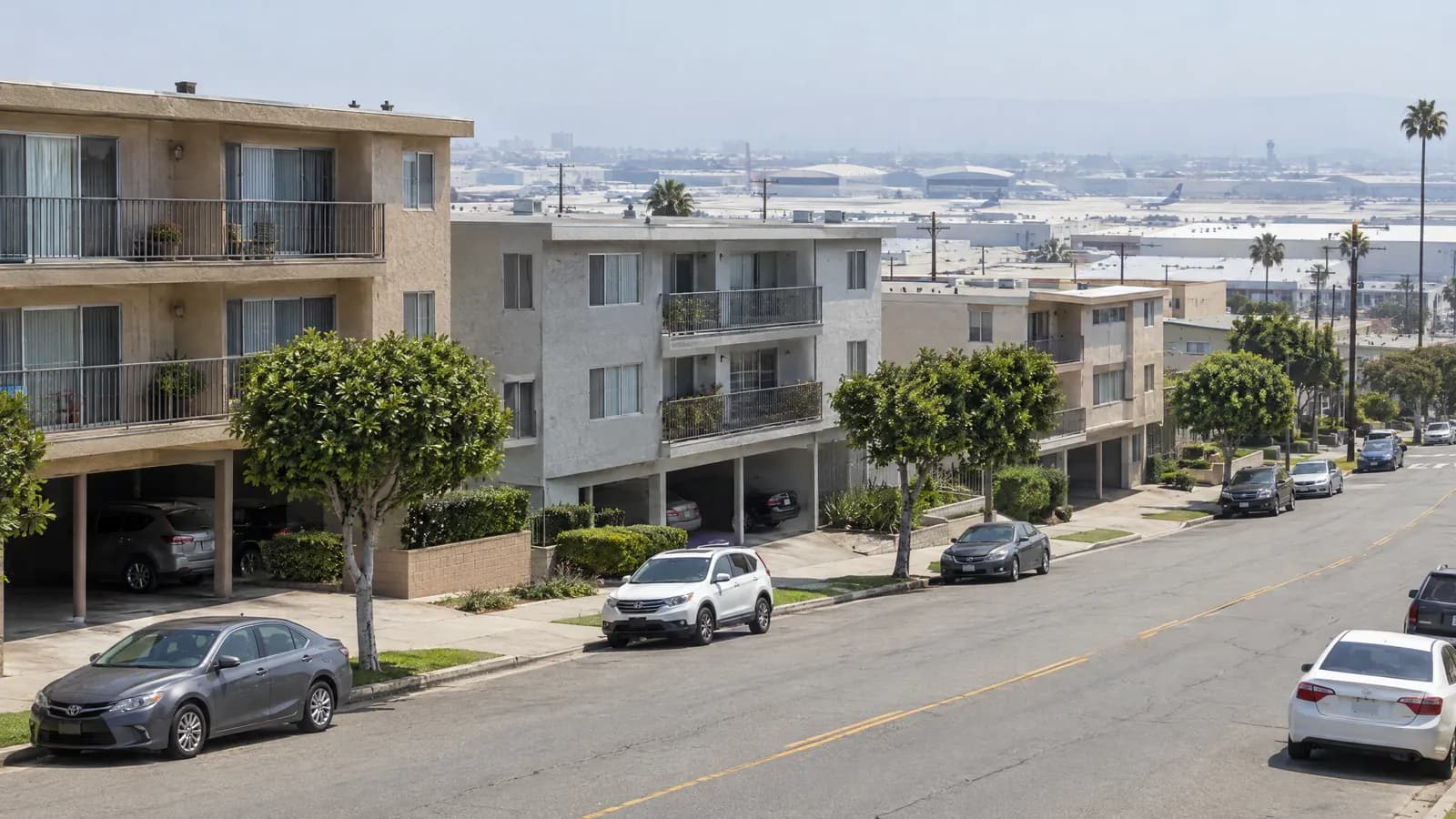
UC IPM describes the Norway rat as a stocky burrower that digs along foundations and under trash piles and woodpiles, and stays mostly at ground level indoors. With about 9,700 Hawthorne homes in buildings of 20 or more units, shared trash enclosures and carports are likely the first places Norway rats settle.
California Civil Code section 1941.1 lists clean, sanitary grounds without rodents or vermin among the conditions of a habitable rental. It also calls for enough garbage receptacles, kept clean and in good repair. For Hawthorne owners, that makes the trash area part of rodent control rather than an afterthought.
On a complex, we check bin lids and enclosure gates, burrows along block walls, carport storage and gaps under doors to laundry and utility rooms. Snap traps and exterior monitoring go in secured spots, and openings into buildings are closed with metal mesh, sheet metal or hardware cloth. [18] [1] [14]
The Hawthorne Plaza shopping center opened in 1977 and has sat empty for nearly 30 years. In 2021 the city sued over blight, citing illegal dumping among other hazards, and a September 2025 court order required the owners to fence the site and clean it daily.
An order announced in August 2026 set demolition to begin by August 14. The work is phased from the south end of the site to the north, with haul trucks using West 120th Street. We have not seen any report of rodents leaving the site.
If you live or run a business on the blocks around it, now is a good time to close gaps under doors and around pipes. Keep trash lids shut and check for fresh droppings or gnawing. Tearing down a large, long-vacant structure can disturb whatever has been living in it, and sealing ahead of time is easier than trapping later. [4] [5]
About 6,600 Hawthorne homes date from the 1950s, according to the Census. Houses that age commonly keep original attic and foundation vents, wood eaves and garage doors that no longer seal, which are the openings roof rats and house mice use.
UC IPM notes that roof rats thrive in residential and industrial areas with mature landscaping and travel along fences and utility lines. Older houses, apartment landscaping and the roughly 175-acre airport with its industrial neighbors likely give them plenty of cover. For businesses near the airfield, we add exterior monitoring along walls and fence lines. [1] [18] [3]
We walk the trash areas, block walls, carports and building perimeter, then check attics, garages and utility rooms.
Snap traps and exterior monitoring for active rodents, while entry points are sealed with metal materials as rodent exclusion.
Removal of droppings and nesting where reachable, sanitizing, and a written plan for the trash area and grounds.
Public-health notices, vector-control alerts and local news we track for this area. Summaries are ours; follow each link for the original report.
Hawthorne recorded the district's only West Nile–positive dead bird of 2025, first detected August 26; Lawndale had two positive sentinel chickens.
Read the originalRelays the city's announcement that demolition at 12124 Hawthorne Blvd must begin by August 14, 2026, in phases from south to north, with haul trucks routed through West 120th Street.
Read the originalA court gave the owners of the Hawthorne Plaza mall, vacant for nearly 30 years, one year to redevelop or demolish it and required fencing, daily cleanup and security; the city's 2021 lawsuit cited illegal dumping and other hazards.
Read the originalThe Hawthorne row of the state table lists Aedes aegypti as present and Aedes albopictus as not found.
Read the originalRecord 220 county cases in 2025 (187 in 2024), with localized outbreaks investigated in Central Los Angeles, Santa Monica and unincorporated Willowbrook; infected fleas ride on rats, stray cats and opossums and reach homes on pets.
Read the originalNo public report we have seen links the demolition to rodents. Still, it makes sense for nearby homes and businesses to seal gaps, keep trash lids closed and watch for fresh droppings or burrows while work continues. If you see activity, call us for an inspection.
Usually the owner or manager. California Civil Code section 1941.1 includes clean grounds without rodents and adequate, well-kept garbage receptacles among habitability conditions. Tenants help by bagging trash and closing lids, and should report rodent activity to management in writing.
Mainly snap traps, exclusion and sanitation. Where an exterior station makes sense at a commercial site or complex, it is locked, anchored and placed according to the label, away from children and pets.
Yes. Rodent exclusion for a complex covers vents, gaps under doors, utility penetrations and foundation cracks across every building. We close them with durable materials such as galvanized mesh, sheet metal and hardware cloth. It can be ordered alone or alongside an ongoing rodent control program.
Fleas that spread flea-borne typhus are commonly found on rats, stray cats and opossums, according to LA County Public Health, which counted a record 220 cases county-wide in 2025. Keeping rodents out of buildings and using flea control on pets lowers that risk.
Yes. Commercial rodent programs include exterior monitoring along walls and fences, roll-up and dock door seals, interior traps and dated service logs for auditors or inspectors.
Three rodents account for nearly every call in Hawthorne, and they live differently. Roof rats climb into attics, trees, ivy and fence tops and eat backyard citrus and avocados on the tree. Norway rats burrow along foundations and under sheds. House mice live indoors, rarely more than about 30 feet from the nest.
Mild winters mean none of them hibernate, and the first cool nights and autumn rains push rats indoors. Older housing supplies the openings: any gap wider than a quarter inch at a vent screen, eave board, utility line or door threshold is enough.
The inspection covers attic, crawl space, garage, kitchen and yard, reading droppings, rub marks, gnawing and burrows to confirm which species is active and where it travels. Traps go on those routes: fastened to beams for roof rats, tight against walls for Norway rats, closely spaced for mice.
Indoors the program leans on snap traps rather than poison, following LA County guidance, because a poisoned rodent that dies inside a wall leaves odor and flies. Monitoring visits reset traps, remove what was caught and compare activity with the last visit so placements move as the rodents do. Sealing openings is Rodent Exclusion, a separate add-on.
Before the technician arrives at your Hawthorne address, clear access to the attic hatch, under-sink cabinets and garage walls, and raise stored boxes so runways show. Pick up fallen fruit and bring pet food in at night. Do not set out poison first: it hides evidence and risks a dead rat in the wall.
Rats are wary of new objects and may ignore traps for days or weeks, so early visits leave traps baited but unset until the bait disappears. Catches and quieter nights follow; monitoring continues because new rats replace caught ones while fruit, ivy and open gaps remain. Never sweep droppings dry: glove up, soak with disinfectant, wipe, double-bag.
Every PesPro service carries a 30-day guarantee, and rodents sit in the strongest tier with bed bugs and cockroaches: if rats or mice reappear within 30 days of a service, PesPro returns for a third visit at no extra cost, where other pests would pay 30% of the original price for a return visit.
The quote is free and written after the inspection. Rodent control is priced by property size, activity found and how often visits are needed; exclusion is priced separately by the number and type of openings to seal. Trapping alone or sealing: the inspection says which.
Same-day service is available for an extra fee. It makes sense when rats are inside the living space, when wiring has been gnawed, when a Hawthorne food business has an inspection pending, or when a tenant complaint has started a habitability clock. Call (323) 472-5329 any hour, or the office and WhatsApp line, (323) 303-3522, in business hours.
The LA County Department of Public Health reported record flea-borne typhus cases in 2025, ties the fleas to rats, free-roaming cats and opossums, and recommends controlling fleas before or alongside trapping where typhus is a concern. For landlords, California Civil Code 1941.1 lists vermin-free premises among habitability duties, so dated service records matter.
PesPro's program keeps digital service logs that Hawthorne owners, HOA boards and inspectors can open any time, same-day compliance documentation when a citation is at stake, tenant-notification templates and consolidated invoicing for multi-site portfolios. Over 15 years the company has protected more than 10,000 properties, more than 500 of them multi-unit.
A house mouse weighs about half an ounce and stays within 30 feet of its nest. Rats weigh 5 to 18 ounces: a roof rat's tail is longer than its body and it favors attics; a Norway rat is stockier and burrows.
Rats avoid new objects and can ignore a trap for days or weeks; floor traps also miss roof rats traveling beams and pipes. If a trap line stays untouched past the second visit, placements move.
Sealing is Rodent Exclusion, a separate add-on and structural work: vents, utility penetrations, foundation cracks and roofline gaps closed with metal mesh, sheet metal or concrete. The inspection lists the openings found and quotes exclusion on its own line.
If rodent activity reappears within 30 days of a service, PesPro returns for a third visit at no extra cost. The exact wording is on your quote, next to the monitoring schedule.
The default indoors is snap traps, because a poisoned rodent can die inside a wall or ceiling. Bait stations are locked, tamper-resistant and placed where children and pets cannot reach them. Tell the technician about pets before placement.
When droppings appear where food is prepared for infants or vulnerable adults, when rats are in living areas, or when a health inspection or tenant complaint sets a deadline. For attic noises alone, a regular appointment follows the same plan.
24/7 Emergency response available throughout Los Angeles County and San Bernardino County
Same-day service available for an extra fee • Licensed & Insured • QualityPro Certified