
San Bernardino County restaurants shut down by health inspectors, May 28-June 4
County data list: a cafe on West Holt Boulevard in Ontario was closed May 28, 2026 for a cockroach infestation and reopened May 29.
Read the original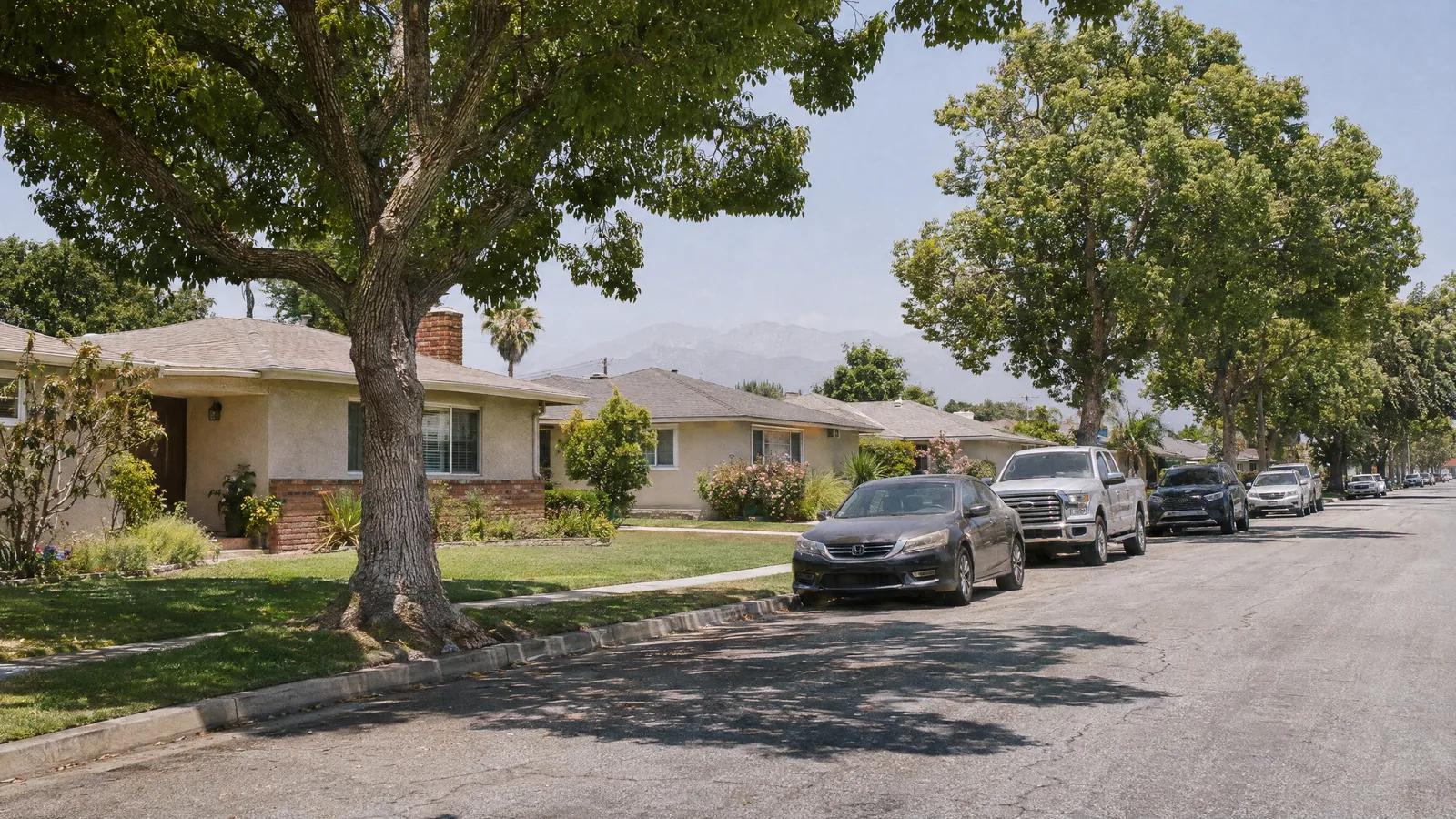
Ontario began as the Chaffey brothers' irrigation colony in 1882 and incorporated in 1891 on less than half a square mile. Today it covers almost 50 square miles and holds about 180,500 people, with 1950s tract houses, large apartment complexes and thousands of homes built since 2010 in Ontario Ranch. Each kind of building tends to bring its own pests. PesPro is a family-owned, QualityPro accredited company that serves Ontario from its only office, in El Monte, for rodents, cockroaches, bed bugs, ants and other household insects.
Free quote and a written plan before any treatment
Neighborhoods and landmarks we cover: Euclid Avenue and its center parkway, Ontario Ranch, the Ontario International Airport area, Holt Boulevard, East D Street, East Fourth Street, South Vineyard Avenue, South Archibald Avenue.
The city's own history starts in August 1881, when George Chaffey first saw the land. He and his brother William bought 6,218 acres with water rights, and the Ontario Colony lands were surveyed and offered for sale in November 1882. George Chaffey named Euclid Avenue, which the city describes as eight miles long and 200 feet wide, with a grass parkway lined with pepper trees. Ontario incorporated on December 10, 1891, when it covered 0.38 square mile, and its first economy was farming, largely citrus.
Growth after World War II took the city to almost 50 square miles, and the housing shows it. Census estimates count about 2,900 homes from before 1940, 2,200 from the 1940s and 7,700 from the 1950s. The largest group is the roughly 21,800 homes built in the 1970s and 1980s, about four in ten. Some 32,400 homes, 58% of the total, are detached houses.
Houses from the early and postwar decades tend to have raised floors with crawl-space vents, attic vents and plumbing that has been repaired many times, and mature trees and hedges now reach many of their roofs. Those are the routes rodents and large cockroaches use most. On an older Ontario house we start at the roofline, the foundation vents and the pipe penetrations before we choose any treatment. [3] [1]
The south end of the city is being built now. The city's economic development office describes Ontario Ranch as 13 square miles and the largest master-planned community in Southern California, with 69,000 residential units and a population of 193,000 planned at completion. It counts 1,200 new homes built there in 2023. Census estimates put about 8,000 Ontario homes, one in seven, at 2010 or later, including 2,500 built since 2020.
New construction is usually tight, so pests in these homes tend to come from outside or arrive in boxes and furniture. UC IPM names the Argentine ant as the most common ant in and around California homes. It notes that ants often enter buildings for food and water or to escape dry, hot weather, and that Argentine ant nests are shallow and link into one large colony. Freshly irrigated yards next to open ground are a likely source of ant trails in a new house.
UC IPM recommends baits as the main tool, says indoor sprays are usually unnecessary, and advises caulking the points where trails enter. That is the approach we take in Ontario Ranch: find the trail, bait it, seal the entry and adjust the irrigation or mulch that is feeding the nest. Grading and construction on neighboring lots may also push field mice and rats toward finished houses, so we check garage door seals and weep holes on the same visit. [4] [1] [16]
UC IPM describes two rats that live around people. Roof rats are climbers that nest above ground in trees, shrubs, ivy, attics and wall voids, and the guide notes that both residential and industrial areas with mature landscaping suit them. They eat citrus and avocados while the fruit is still on the tree. Norway rats are heavier and dig burrows along foundations and under woodpiles, and indoors they usually stay on the ground floor.
Ontario has both settings: older yards with fruit trees and hedges, and commercial and industrial blocks with landscaping and loading areas. In the weekly closure lists The Sun publishes from San Bernardino County data, a market on East Holt Boulevard was closed on September 4, 2025 for a rodent infestation, and a market on East D Street was closed for the same reason on October 16, 2025. Each reopened the next day. A cafe on West Holt Boulevard was closed for a cockroach infestation on May 28, 2026 and reopened a day later.
For rodents, UC IPM puts exclusion first: seal every hole wider than a quarter inch and cover vents with half-inch galvanized mesh of 16 or 18 gauge. It also reports that California now prohibits most uses of anticoagulant rodenticides, so our Ontario rodent work relies on trapping and sealing. The West Valley district offers a rodent inspection of a property's perimeter and entry points; the trapping and repairs are left to owners and licensed companies. [14] [11] [12] [13] [6]
About 22,600 Ontario households rent. Besides the large complexes, Census estimates count roughly 1,150 homes in duplexes and 4,050 in triplexes and fourplexes, plus about 2,240 mobile homes. In small buildings two bedrooms often share one wall, so bed bugs and German cockroaches tend to move from one unit to the next before anyone reports them.
UC IPM notes that people carry bed bugs home on clothing, bedding, furniture and luggage, and that secondhand beds and mattresses deserve a close inspection before they come indoors. Eggs hatch in about 10 to 15 days at room temperature, and bed bugs can go 20 to 400 days without feeding, depending on temperature and humidity. An empty unit therefore does not clear itself, and one treatment with no follow-up is unlikely to finish the job.
The city inspects rental units more than seven years old once every four years and can inspect sooner when it receives a complaint. Between inspections, the first report usually comes from a tenant. About 78,600 Ontario residents speak Spanish at home and roughly 31,300 of them speak English less than very well, so our technicians explain findings and preparation steps in either language. [1] [15] [2]
PesPro does not treat mosquitoes. In Ontario that work belongs to the West Valley Mosquito and Vector Control District, which was formed in 1983 and has its office at 1295 E. Locust St. in Ontario. It serves more than 650,000 people in Ontario, Chino, Chino Hills, Montclair, Rancho Cucamonga and Upland. Its services include mosquito and swimming pool inspections, larvicide treatment and free mosquitofish.
The California Department of Public Health lists Aedes aegypti, the day-biting yellow fever mosquito, as present in Ontario and Aedes albopictus as not found. Ontario was also where the district first tested sterile males. The Daily Bulletin reported in May 2024 that a September 2023 pilot cut the Aedes population by 70% in the targeted Ontario neighborhoods, and that weekly releases then expanded to all six member cities.
West Nile virus is carried by a different mosquito, and it does turn up locally. In the district's weekly updates for the 2025 season, positive mosquito samples were reported in Ontario on August 22 and in Chino in mid-September, with none in the other weeks. For a green pool, standing water or daytime biting, call the district at 909-635-0307 or file a request at wvmvcd.org. [5] [6] [9] [10] [8]
PesPro treats rodents and insects only. For skunks, opossums and other wild animals, the West Valley district's guidance is to call animal control or the California Department of Fish and Wildlife. The district notes that poisoning skunks is prohibited and that trapping or relocating wild animals requires the state department's approval. Once an animal has left, we can close the gaps under decks, sheds and crawl spaces against rats and mice.
The same district page gives cleanup advice we follow after rodent work: do not sweep or vacuum droppings and nesting material, wear gloves, wet the area with disinfectant or diluted bleach and let it soak before wiping it up. The district has also discontinued its bee removal service and now refers residents to outside bee resources, so swarms and hives in Ontario are a matter for beekeepers or a private company. [7] [6]
| Pest | Peak season | What to watch for locally |
|---|---|---|
| Roof rats & Norway rats | Year-round | Fruit trees, hedges and attics in older neighborhoods; burrows along foundations and behind commercial buildings |
| Argentine ants | Hot, dry spells and after rain | Trails into kitchens and bathrooms, often from irrigated yards around newer homes |
| Cockroaches | Year-round indoors; outdoor species peak in summer heat | German cockroaches in shared-wall kitchens; large roaches from drains and meter boxes |
| Bed bugs | Year-round | Rentals, small multi-unit buildings, mobile homes and secondhand furniture |
| House mice | Fall and winter | Garages, storage rooms and gaps under doors as nights cool |
| Mosquitoes (awareness only) | Summer into fall | Aedes aegypti is present in Ontario; report problems to the West Valley district |
Public-health notices, vector-control alerts and local news we track for this area. Summaries are ours; follow each link for the original report.
County data list: a cafe on West Holt Boulevard in Ontario was closed May 28, 2026 for a cockroach infestation and reopened May 29.
Read the originalCounty data list: a market on East D Street in Ontario was closed October 16, 2025 for a rodent infestation and reopened October 17.
Read the originalCounty data list: a market on East Holt Boulevard in Ontario was closed September 4, 2025 for a rodent infestation and reopened September 5.
Read the originalWeekly posts from late June to early November 2025 reported West Nile-positive mosquito samples in Ontario on August 22 and in Chino on September 12; the other weekly updates reported no positive samples.
Read the originalThe state table lists Aedes aegypti as present in Ontario, San Bernardino County, and Aedes albopictus as not found there.
Read the originalReports that a September 2023 West Valley district pilot with sterile male Aedes aegypti cut the population by 70% in targeted Ontario neighborhoods, and that weekly releases followed in Ontario, Montclair, Upland, Rancho Cucamonga, Chino and Chino Hills.
Read the originalCounty closures for the week: restaurants in Chino and Rancho Cucamonga were each closed on Aug. 6, 2026 for cockroach infestations.
Read the originalWeekly list based on county public health data: two food businesses on Foothill Boulevard in Upland were closed July 9, 2026 for cockroach infestations.
Read the originalFood sales at a Fontana market were stopped on July 29, 2026 because of a cockroach infestation.
Read the originalExplains the county's 100-point score and A/B/C letter grades, and states that a facility posing an immediate danger, such as a cockroach or rodent infestation, is closed regardless of its grade.
No. PesPro is a family-owned company with one office, in El Monte, and our technicians drive to Ontario from there. We serve the whole city, from the older streets around Euclid Avenue to Ontario Ranch. Call with your address and we will confirm scheduling.
New houses are tight, but the yard is not. UC IPM says the Argentine ant is the most common ant around California homes and that ants come indoors for food, water or relief from dry, hot weather. Fresh irrigation and mulch likely give them a place to nest. Baits and sealed entry points work better than indoor sprays.
Look at where the signs are. UC IPM describes roof rats as climbers that nest in trees, ivy, attics and wall voids, and Norway rats as burrowers found along foundations and under woodpiles. Noise overhead points to roof rats; holes in the soil beside the slab point to Norway rats. We confirm the species before setting traps.
The West Valley Mosquito and Vector Control District, whose office is in Ontario: 909-635-0307 or wvmvcd.org. It inspects yards and pools, treats breeding sources and supplies free mosquitofish. PesPro does not offer mosquito control.
Yes. UC IPM reports that bed bugs can go 20 to 400 days without feeding, depending on temperature and humidity, and that eggs hatch in about 10 to 15 days. A vacant unit should be inspected and treated before the next tenant moves in, along with the units that share its walls.
No. We handle rodents and insects. The West Valley district advises calling animal control or the California Department of Fish and Wildlife about wild animals, and notes that relocating them requires state approval. After the animal is gone, we can seal the openings it used so rats and mice do not move in.
Yes. Every PesPro technician speaks English and Spanish. Census estimates show about 78,600 Ontario residents speak Spanish at home, so inspections, preparation steps and follow-up instructions can be explained in whichever language you prefer.
24/7 Emergency response available throughout Los Angeles County and San Bernardino County
Same-day service available for an extra fee • Licensed & Insured • QualityPro Certified