West Nile Virus Activity 2026 (as of 10/20/2026)
Inglewood shows 29 of the district's 74 positive mosquito samples (first on July 28, 2026) and five positive sentinel chickens (first on August 18).
Read the original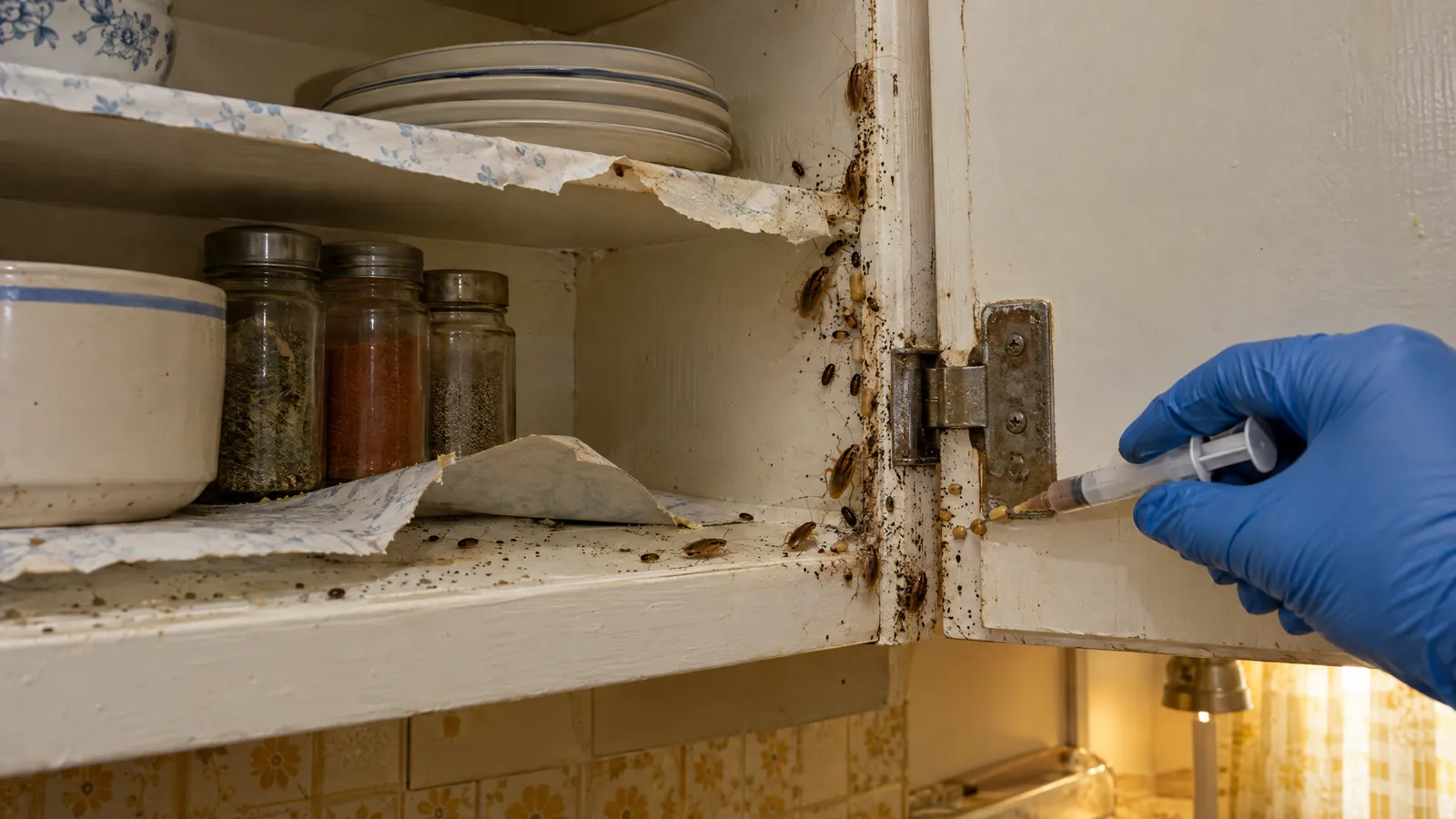
German cockroaches settle into older apartment kitchens and busy bar and restaurant kitchens, and Inglewood has plenty of both. We bait where they breed, add a growth regulator that stops the next generation and keep food businesses ready for the county inspector.
County inspectors closed a sports bar and grill in downtown Inglewood, on South Market Street, for a vermin infestation on August 4, 2026.
Free quote and a written plan before any treatment
About 16,700 Inglewood homes are in buildings of five or more units, and roughly half of the city's housing was built before 1960, according to the Census. In older buildings, kitchens and bathrooms often share plumbing walls with the next unit, and decades of repairs leave gaps around pipes, cabinets and baseboards.
UC IPM calls the German cockroach the most common indoor species in California, especially in multi-unit housing, and notes that an adult can hide in a crack 1/16 inch wide. Females carry their egg case for most of its 30-day incubation, which helps shield the next generation from sprays. That is why we rely on bait and an insect growth regulator. [1] [19]
Food businesses along Market Street and Inglewood's commercial corridors answer to LA County health inspectors, who can close a kitchen when they find vermin. KTLA's August 2026 list of county closures included a sports bar and grill on South Market Street, shut on August 4 under Health and Safety Code section 114259.1.
Bars have their own trouble spots: ice wells, floor drains under the counter, soda and beer lines that drip, and warm compressor housings. We schedule visits before opening or after close and use gel baits, growth regulators and traps labeled for food areas. There is no broadcast spraying near food surfaces, and every visit leaves a written service log. [11]
Inglewood saw the stakes in 2014. After a KPCC investigation, a county inspector reported evidence of cockroaches in the kitchen area at Inglewood High School. The state trustee then running the district announced that an exterminator would visit monthly.
Older schools, churches, clinics and offices tend to need that kind of recurring program rather than a one-time spray. We set a schedule and place sticky monitors in kitchens, break rooms and storage areas. Reading them on every visit means a rising count gets attention before it turns into a complaint. [12]
We confirm the species and find where cockroaches breed before choosing products.
Gel bait in cracks and voids, an insect growth regulator that keeps nymphs from maturing, and drain treatment when American cockroaches are involved.
We return to read the monitors, rebait where cockroaches are still feeding and point out gaps worth sealing.
Public-health notices, vector-control alerts and local news we track for this area. Summaries are ours; follow each link for the original report.
Inglewood shows 29 of the district's 74 positive mosquito samples (first on July 28, 2026) and five positive sentinel chickens (first on August 18).
Read the originalInglewood logged 22 of the district's 23 positive mosquito samples (first on July 2, 2024), plus one positive dead bird and five positive sentinel chickens.
Read the originalThe station's list of LA County Health Department closures includes a sports bar and grill on S. Market St. in Inglewood, closed August 4, 2026 for a vermin infestation, with no reopening date given.
Read the originalThe state table's Inglewood row marks Aedes aegypti as present and Aedes albopictus as not found.
Read the originalA record 220 county-wide cases in 2025, up from 187, with nearly nine in ten patients hospitalized; infected fleas are commonly found on rats, stray cats and opossums.
Read the originalA county inspector found evidence of cockroaches in the kitchen area at Inglewood High School, and the state trustee then running the district said an exterminator would visit monthly.
Read the originalUsually because they breed where a spray never reaches: inside cabinet hinges, appliance motors and wall voids, and sometimes in the unit next door. Bait that cockroaches carry back to their hiding spots, plus a growth regulator, reaches that hidden population over the following weeks.
Yes. Visits are scheduled before opening or after close. We use products labeled for food areas, keep sprays away from food surfaces and leave a dated service log you can show an LA County inspector.
Prep is required. Clear the areas under sinks and counters, wipe up grease and crumbs, store food in sealed containers and give us access around appliances. Your technician will go over the checklist in English or Spanish.
No. The large reddish ones are usually American cockroaches. UC IPM says they live in sewers, storm drains and water meter boxes and wander in through damaged pipes, missing screens or faulty drain traps. The small light-brown ones are usually German cockroaches breeding indoors.
Often, yes. When units connect through plumbing walls, a building plan that the owner approves, covering the affected unit and its neighbors, keeps the population from simply shifting next door and back.
Expect fewer sightings over two to three weeks while the colony feeds on the bait. The follow-up visit compares the monitors and adds bait wherever cockroaches are still active.
The small light-brown roach with two dark stripes behind its head is a German cockroach, and it lives indoors only: cabinet hinges, backsplash gaps and appliance motors. Females carry egg cases of about 30 young almost until they hatch, so killing visible roaches leaves the next generation untouched. In Inglewood apartments they travel between units through pipe chases and shared wall voids.
The big reddish roach near a drain is an American cockroach up from the sewer in hot weather, often through a dry floor drain. The shiny black one stuck in the bathtub is an Oriental or Turkestan cockroach from a damp garage, meter box or ivy bed. Each needs a different plan.
The technician inspects the kitchen, bathrooms, laundry and water heater closet, checking hinges, pipe gaps and appliance motors for droppings and egg cases, and confirms the species. Small dabs of gel bait then go inside the cracks where roaches hide and forage, not on open counters. Dust reaches wall voids and cabinet kick spaces.
An insect growth regulator is added so nymphs hatching after the visit never become breeding adults, breaking the cycle that lets German cockroaches rebound after a spray. The follow-up visit reads the sticky monitors, rebaits where feeding continues and switches products if feeding has stopped. Multi-unit buildings and restaurants in Inglewood receive a service log each visit.
Empty kitchen cabinets, drawers and under-sink cabinets so hinges, corners and pipe gaps are reachable. Put all food, pet food included, in sealed containers or the refrigerator. Clear the floor in front of the stove and refrigerator, remove cardboard boxes and paper bags, and fix or report dripping taps.
Stop using store sprays and foggers; they repel roaches into the walls and away from the bait. Bait is slow by design: roaches carry it back to the harborage and share it, so a week or longer passes before numbers drop. Expect several weeks and at least one follow-up for a German colony.
Every PesPro service carries a 30-day guarantee, and cockroaches are in the top tier with bed bugs and rodents: if roaches reappear within 30 days of your treatment, PesPro returns for a third visit at no extra cost. Other pests pay 30% of the original price for a return visit in that window.
Quotes are free and written after the inspection, because the species, the spread and whether neighboring units or a commercial kitchen are involved set the scope. Multi-unit buildings in Inglewood are quoted per door, with rates that fall as the building grows; restaurants by square footage and risk.
Same-day service is available for an extra fee. It pays off when a restaurant has failed an inspection or has one coming, when roaches are out on counters in daylight, which signals a crowded colony, or when someone in the home has asthma. The 24/7 line is (323) 472-5329.
Vermin infestation is the most frequent reason in recent LA County weekly food-facility closure reports, which is why PesPro's restaurant logs are organized around what inspectors check: droppings, live activity and harborage. Service runs before opening or after close, with no broadcast spraying near food surfaces.
Multi-unit programs treat unit by unit plus trash rooms and utility closets, supply tenant-notification templates, and keep digital service logs that HOA boards can review. PesPro is QualityPro certified, a credential held by fewer than 3% of US pest control companies, and holds a 4.9-star Google rating across 132 reviews.
Because gel bait works slowly: roaches eat it, return to the harborage and share it, and females carrying egg cases feed very little, so their young hatch into the growth regulator afterward. Numbers usually fall in the second and third weeks.
Leave them. Wiping removes the only thing the colony is eating, and sprays repel roaches into the walls or the next unit. Clean counters and floors normally, but keep cleaners off the dots until the program is finished.
Treating one unit while connected units stay infested shuffles roaches around, so PesPro inspects and treats adjoining units and common areas when the manager authorizes it. Civil Code 1941.1 lists vermin-free premises among a landlord's habitability duties; general information, not legal advice.
If roaches reappear within 30 days of your treatment, PesPro returns for a third visit at no extra cost. Keeping the bait dots intact and following the sanitation list keeps the guarantee simple to use.
Gel bait sits in tiny amounts inside cracks where hands and paws do not reach. Growth regulators act on insect hormones that people and pets lack and are low in toxicity. PesPro uses pet-safe and child-safe formulations under California DPR guidelines.
Foggers settle on open surfaces and never reach the cracks where cockroaches breed; survivors scatter deeper into walls and neighboring units, which makes the bait treatment slower. Save the money; the quote is free.

24/7 Emergency response available throughout Los Angeles County and San Bernardino County
Same-day service available for an extra fee • Licensed & Insured • QualityPro Certified