West Nile virus-positive dead birds by county and city, California 2026
Lists two West Nile–positive dead birds from Victorville in 2026, among 19 in San Bernardino County.
Read the original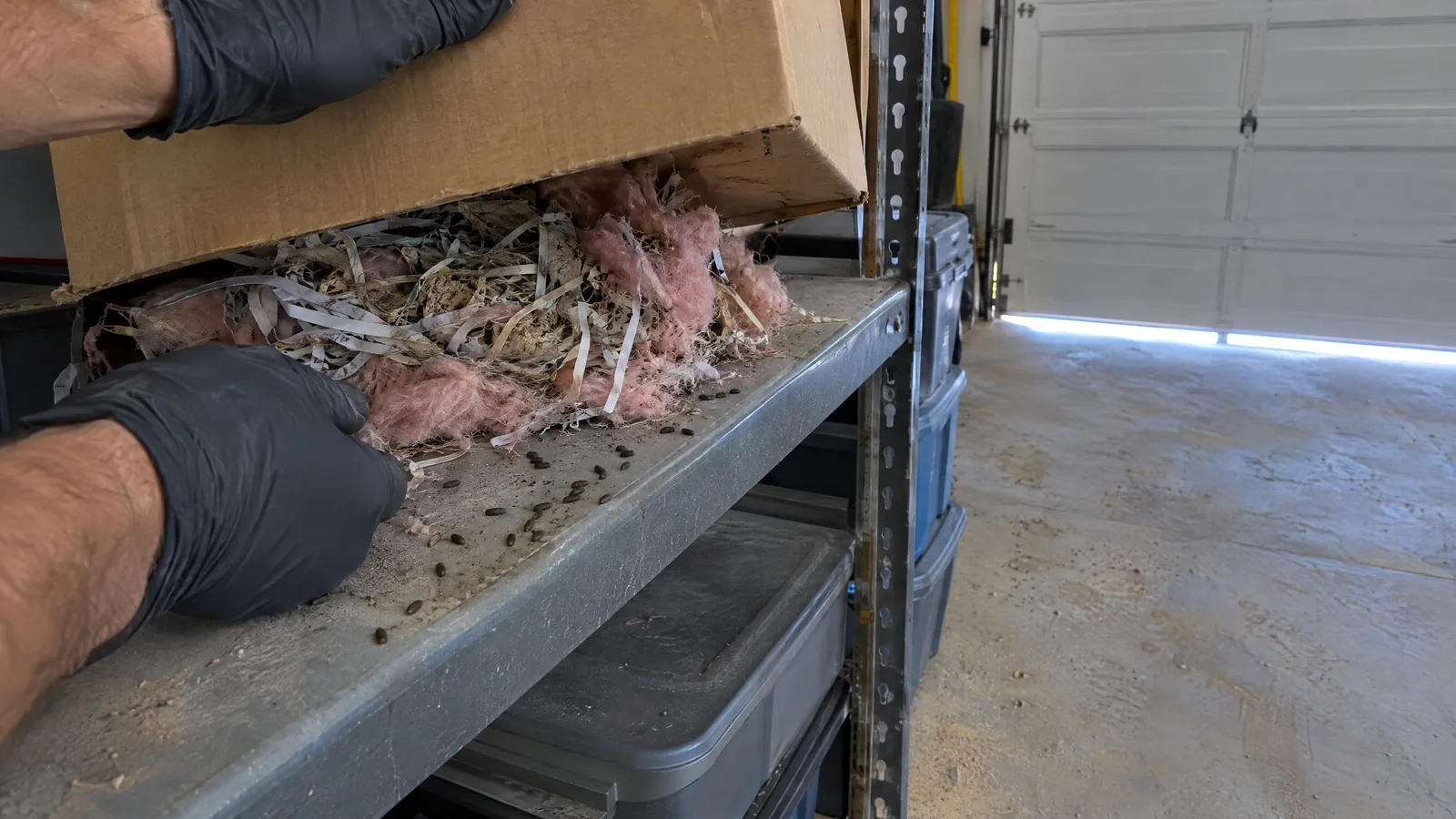
In the High Desert, many of the rodents that end up indoors are natives: deer mice from open lots and pack rats from brush, along with house mice in garages. They move in when nights turn cold or a house sits empty. We trap what is inside, seal openings with metal and clean droppings with the precautions hantavirus calls for.
Victorville's NOAA station averages about 54 nights a year at or below freezing, and the Census counts roughly 2,200 vacant housing units in the city.
Free quote and a written plan before any treatment
UC IPM calls the deer mouse the most abundant mammal in North America and a concern because it spreads hantavirus. It is uncommon in towns unless fields or open land are nearby, which describes many Victorville streets, and it readily moves into vacated houses, cabins and sheds. Look for a white belly and a sharply two-toned tail.
The illness is rare: the state counts 99 Sin Nombre hantavirus infections in California residents from 1980 through 2025, two with exposure in San Bernardino County. People catch it by breathing dust from dried droppings and urine. That is why the county warns against sweeping or vacuuming droppings and recommends airing out closed spaces, then soaking droppings with disinfectant before wiping. [18] [19] [20] [21]
The NOAA station in Victorville averages about 54 nights a year at or below 32°F, with December and January lows near freezing. That is when a warm garage or wall void matters most to a mouse. The Census counts about 2,200 vacant housing units in the city, roughly one in twenty, and an empty house gives mice months without disturbance.
UC IPM recommends sealing any opening larger than a quarter inch with metal or concrete, because mice gnaw to widen such gaps and can chew through foam or wood. On desert tract homes we check garage door seals, the gaps around plumbing and gas lines, attic and roof vents, and the base of block walls. [3] [2] [1] [18]
UC IPM lists the desert woodrat among California's pack rats, native rats that can live in and around homes. Their furry tails set them apart from roof rats and Norway rats. Ground squirrel burrows can damage landscapes, and UC IPM warns that the squirrels' fleas can carry plague. The county's vector program surveys rodents for plague and hantavirus, and in 2018 none tested positive.
For pack rats and mice we trap inside and seal the structure. Sheds, woodpiles and stored vehicles near open desert are common nesting spots, so we inspect them along with the house. For ground squirrel burrows along a slab or wall, ask us what applies to your property. [22] [23] [13]
We look for droppings, nests and every gap a mouse could use, inside and out.
Traps clear the rodents inside while steel mesh and sheet metal close the openings.
Droppings and nests are cleaned with the county's no-sweep method, then the property is monitored.
Public-health notices, vector-control alerts and local news we track for this area. Summaries are ours; follow each link for the original report.
Lists two West Nile–positive dead birds from Victorville in 2026, among 19 in San Bernardino County.
Read the originalLocal station item relaying county health officials: a Victorville resident had been hospitalized with West Nile virus, and residents should report green pools to the county program.
Read the originalLists Mojave Narrows Regional Park in Victorville among the parks where the program traps mosquitoes, surveys rodents or checks ticks, records seven Victorville service requests in 2018, and reports no rodents positive for plague or hantavirus.
Read the originalThe state counts 99 Sin Nombre hantavirus infections in California residents from 1980 to 2025, two of them with exposure in San Bernardino County.
Read the originalRelays the state health department's report of the highest West Nile activity in five years, with 30 human cases statewide by mid-August 2026.
Read the originalOpen the doors and let it air out for 30 minutes before you start. Wear gloves and a mask, spray the droppings with disinfectant or a bleach solution, and wait five minutes. Then wipe them up with paper towels and bag everything. Do not sweep or vacuum, which puts dust in the air.
It is possible. UC IPM notes that deer mice move into vacated buildings, and Victorville has about 2,200 vacant housing units. Before you unpack, check the garage, attic, cabinets and water heater area for droppings and nests, or have us inspect and seal the house.
No. Pack rats, or woodrats, are native rats, and UC IPM lists the desert woodrat among them. They have furry tails, while roof rats and Norway rats have scaly, mostly hairless ones. Both are trapped in similar ways, but pack rats often nest in sheds and brush near open desert.
Their burrows can, over time. UC IPM notes that ground squirrel burrowing damages landscapes and sometimes requires costly repair. Burrows along a slab, patio or wall are worth dealing with early, so call us and we will tell you what applies at your property.
Yes. Large buildings at the desert edge need exterior monitoring, door and dock seals that close tight, and interior traps along walls and storage. Each visit is logged with activity and needed repairs, and we schedule around your shifts.
Victorville averages about 54 freezing nights a year, and a heated house or garage is the warmest shelter around. Mice can squeeze through gaps of about a quarter inch, so sealing before late fall is the most effective step.
Three rodents account for nearly every call in Victorville, and they live differently. Roof rats climb into attics, trees, ivy and fence tops and eat backyard citrus and avocados on the tree. Norway rats burrow along foundations and under sheds. House mice live indoors, rarely more than about 30 feet from the nest.
Mild winters mean none of them hibernate, and the first cool nights and autumn rains push rats indoors. Older housing supplies the openings: any gap wider than a quarter inch at a vent screen, eave board, utility line or door threshold is enough.
The inspection covers attic, crawl space, garage, kitchen and yard, reading droppings, rub marks, gnawing and burrows to confirm which species is active and where it travels. Traps go on those routes: fastened to beams for roof rats, tight against walls for Norway rats, closely spaced for mice.
Indoors the program leans on snap traps rather than poison, following LA County guidance, because a poisoned rodent that dies inside a wall leaves odor and flies. Monitoring visits reset traps, remove what was caught and compare activity with the last visit so placements move as the rodents do. Sealing openings is Rodent Exclusion, a separate add-on.
Before the technician arrives at your Victorville address, clear access to the attic hatch, under-sink cabinets and garage walls, and raise stored boxes so runways show. Pick up fallen fruit and bring pet food in at night. Do not set out poison first: it hides evidence and risks a dead rat in the wall.
Rats are wary of new objects and may ignore traps for days or weeks, so early visits leave traps baited but unset until the bait disappears. Catches and quieter nights follow; monitoring continues because new rats replace caught ones while fruit, ivy and open gaps remain. Never sweep droppings dry: glove up, soak with disinfectant, wipe, double-bag.
Every PesPro service carries a 30-day guarantee, and rodents sit in the strongest tier with bed bugs and cockroaches: if rats or mice reappear within 30 days of a service, PesPro returns for a third visit at no extra cost, where other pests would pay 30% of the original price for a return visit.
The quote is free and written after the inspection. Rodent control is priced by property size, activity found and how often visits are needed; exclusion is priced separately by the number and type of openings to seal. Trapping alone or sealing: the inspection says which.
Same-day service is available for an extra fee. It makes sense when rats are inside the living space, when wiring has been gnawed, when a Victorville food business has an inspection pending, or when a tenant complaint has started a habitability clock. Call (323) 472-5329 any hour, or the office and WhatsApp line, (323) 303-3522, in business hours.
The LA County Department of Public Health reported record flea-borne typhus cases in 2025, ties the fleas to rats, free-roaming cats and opossums, and recommends controlling fleas before or alongside trapping where typhus is a concern. For landlords, California Civil Code 1941.1 lists vermin-free premises among habitability duties, so dated service records matter.
PesPro's program keeps digital service logs that Victorville owners, HOA boards and inspectors can open any time, same-day compliance documentation when a citation is at stake, tenant-notification templates and consolidated invoicing for multi-site portfolios. Over 15 years the company has protected more than 10,000 properties, more than 500 of them multi-unit.
A house mouse weighs about half an ounce and stays within 30 feet of its nest. Rats weigh 5 to 18 ounces: a roof rat's tail is longer than its body and it favors attics; a Norway rat is stockier and burrows.
Rats avoid new objects and can ignore a trap for days or weeks; floor traps also miss roof rats traveling beams and pipes. If a trap line stays untouched past the second visit, placements move.
Sealing is Rodent Exclusion, a separate add-on and structural work: vents, utility penetrations, foundation cracks and roofline gaps closed with metal mesh, sheet metal or concrete. The inspection lists the openings found and quotes exclusion on its own line.
If rodent activity reappears within 30 days of a service, PesPro returns for a third visit at no extra cost. The exact wording is on your quote, next to the monitoring schedule.
The default indoors is snap traps, because a poisoned rodent can die inside a wall or ceiling. Bait stations are locked, tamper-resistant and placed where children and pets cannot reach them. Tell the technician about pets before placement.
When droppings appear where food is prepared for infants or vulnerable adults, when rats are in living areas, or when a health inspection or tenant complaint sets a deadline. For attic noises alone, a regular appointment follows the same plan.

24/7 Emergency response available throughout Los Angeles County and San Bernardino County
Same-day service available for an extra fee • Licensed & Insured • QualityPro Certified